7 Stainless Steel Surface Finishes: Impact and Selection Criteria
Choosing the wrong stainless steel finish can be a costly mistake. It not only impacts your budget but can compromise your entire project's integrity. Let's ensure you get it right.
The seven primary stainless steel surface finishes, from a rough No. 1 to a reflective No. 8 mirror, are standardized textures that dictate a product's final look, feel, and performance. Selecting the right one is crucial for balancing aesthetics, corrosion resistance, durability, and cost.
As the Global Business Director at MFY, I've seen firsthand how a surface finish can make or break a project. It’s a decision that goes far beyond simple aesthetics; it’s a strategic choice with significant functional and financial implications. Whether you're in construction, food processing, or manufacturing, understanding these nuances is essential for success. In this article, I'll walk you through the key finishes, the challenges in selection, and the strategies we use at MFY to help our partners make the optimal choice every time.
What Are the Fundamentals of Stainless Steel Surface Finishes?
The world of finishes can seem complex and technical. This confusion often leads to poor material specifications and suboptimal project outcomes. Let's demystify the basics for absolute clarity.
Stainless steel surface finishes are the result of mechanical or chemical treatments applied during production. These finishes, such as the common No. 4 brushed or No. 2B matte, determine the material's surface roughness, reflectivity, and suitability for specific applications like architecture or food-grade equipment.
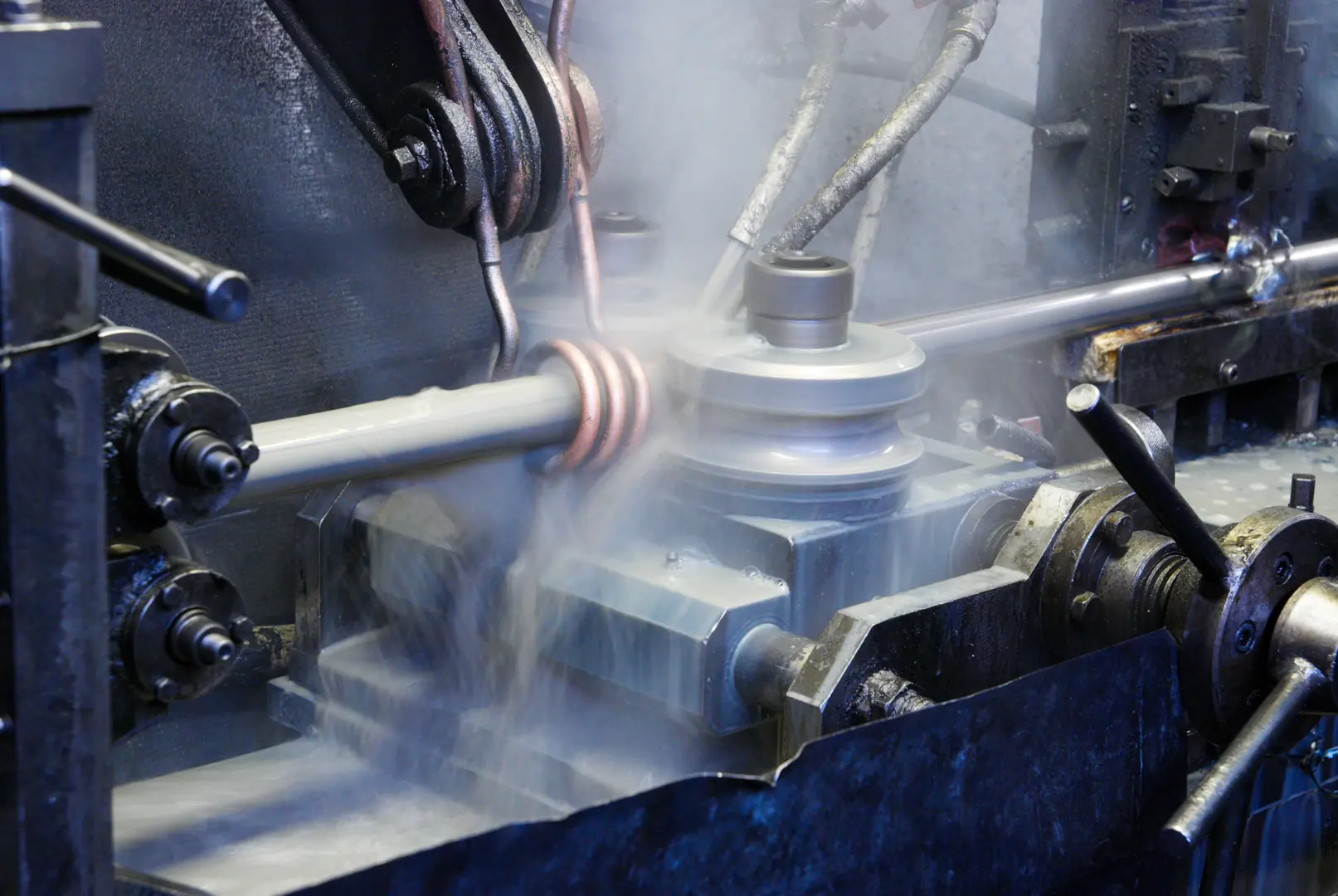
Let's dive deeper into what these finishes actually are. They are not coatings; they are an integral part of the steel itself. The finish is created through processes like rolling, pickling, grinding, and polishing. Each step modifies the surface topography, which in turn affects everything from how the material reflects light to how easily it can be cleaned. For instance, a rougher finish might hide scratches well in a high-traffic area, while a smoother, non-porous finish is essential in a hygienic environment to prevent bacterial growth. At MFY, we work with the full spectrum of finishes, and understanding their core purpose is the first step in proper selection.
The Core Seven Finishes
The most common finishes are standardized to ensure consistency across the global supply chain. While there are many specialty finishes, most projects will use one of the following.
| Finish ID | Common Name | Description | Typical Application |
|---|---|---|---|
| No. 1 | Hot-Rolled Annealed | A rough, dull, and non-uniform finish. | Industrial applications where appearance is not a factor. |
| No. 2B | Cold-Rolled Matte | A smooth, moderately reflective cold-rolled finish. | The most common finish for a wide range of products. |
| No. 3 | Coarse Abrasive | A brushed finish with coarse, parallel polishing lines. | Intermediate finish, often for surfaces needing more work. |
| No. 4 | Brushed Finish | A polished finish with fine, directional lines. | Kitchen appliances, architectural panels, food equipment. |
| No. 6 | Satin Finish | A soft, satin sheen with finer lines than No. 4. | Decorative and architectural uses. (Less common now) |
| No. 7 | Reflective Finish | A highly reflective finish, but some lines are visible. | Architectural trim, ornamental features. |
| No. 8 | Mirror Finish | A highly polished, non-directional, mirror-like finish. | Decorative surfaces, reflectors, clean rooms. |
Understanding this table is your foundational guide to speaking the language of stainless steel.
What Are the Current Trends in Stainless Steel Surface Treatment?
Keeping up with industry advancements is a constant challenge. Falling behind on new techniques means losing your competitive edge and missing out on better, more efficient solutions. Let's explore the trends shaping our industry.
Current trends are pushing beyond traditional looks, focusing on sustainability, advanced textures, and enhanced performance. Key developments include eco-friendly finishing processes, physical vapor deposition (PVD) for vibrant colors, and digitally created patterns that offer unique aesthetic and functional benefits.
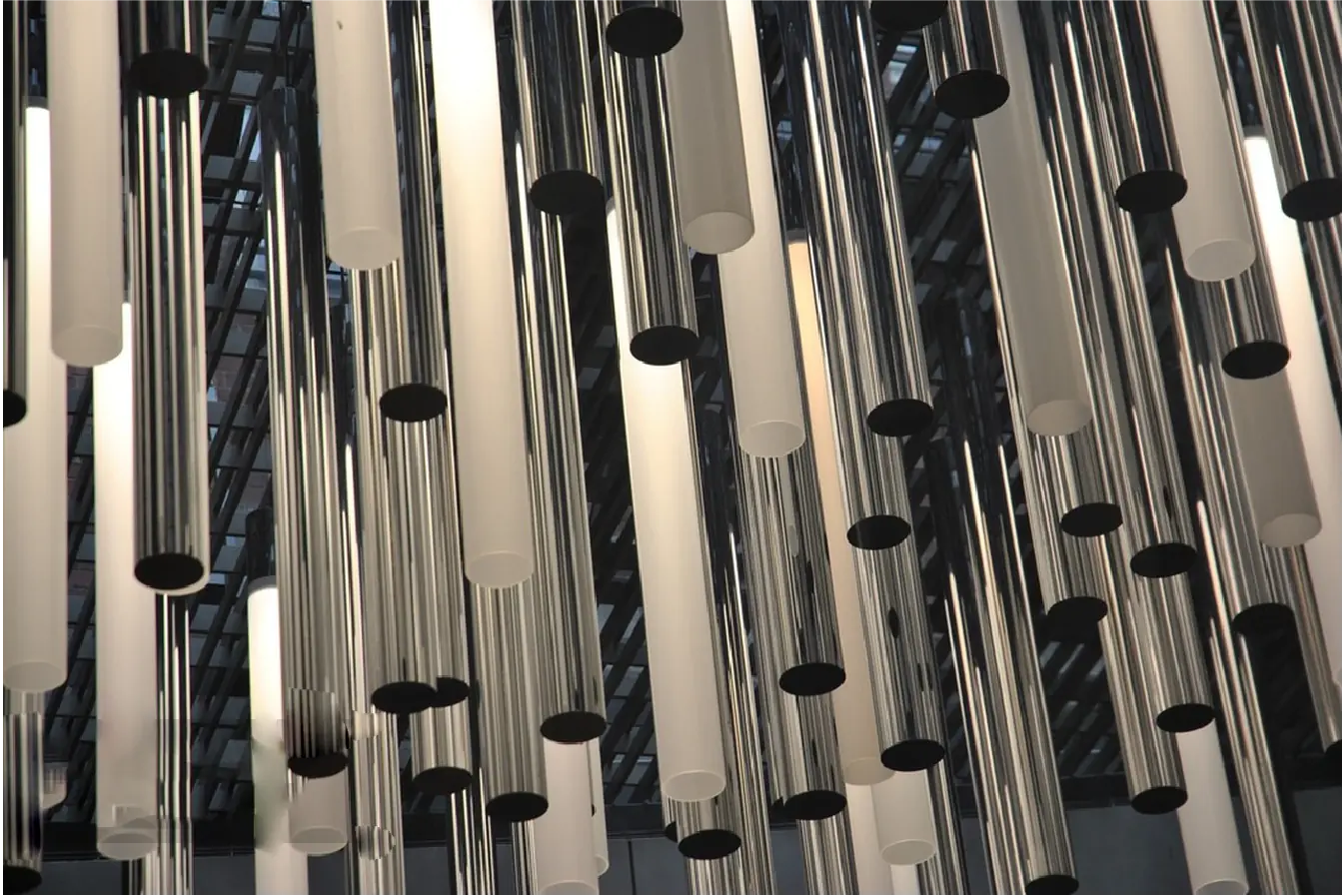
The stainless steel industry is not static; it's constantly evolving. I was recently in Milan for a design fair and was struck by how architects are using stainless steel in new ways. I saw a hotel lobby clad in stainless steel panels with a digitally printed, textured wood grain. It had the warmth of timber but the durability and fire resistance of steel—a perfect example of modern innovation. This is where the industry is heading.
Sustainability in Finishing
For years, some finishing processes involved harsh chemicals. Today, the push for green manufacturing is paramount. We are seeing a significant shift towards more environmentally friendly methods, such as advanced mechanical polishing that reduces chemical use and closed-loop acid pickling systems[^1] that recycle waste. As a company with a global footprint, we at MFY are deeply invested in these sustainable practices. It's not just good for the planet; it's what our clients, especially in Europe and North America, are demanding.
Advanced Texturing and Coloring
The second major trend is the move towards customization and advanced aesthetics.
- PVD (Physical Vapor Deposition): This process applies a thin ceramic coating to the steel in a vacuum, creating durable, brilliant colors like gold, black, and bronze without paint.
- Embossing & Patterning: Creating raised or recessed patterns on the steel surface not only adds visual depth but also increases rigidity and hides dents and scratches, making it ideal for high-traffic areas like elevator doors and wall panels.
- Digital Printing: As I saw in Milan, this allows for almost any pattern or image to be printed directly onto the steel, opening up limitless design possibilities.
These trends show that stainless steel is no longer just a functional, silver-colored material. It's a dynamic design element.
What Are the Biggest Challenges in Selecting the Right Surface Finish?
Making a final decision on a finish can feel overwhelming. A poor choice can lead to budget overruns, project delays, or even failure to meet critical regulatory standards. Let's break down the common challenges.
The primary challenges in selecting a stainless steel finish are balancing initial cost against long-term performance, ensuring compliance with industry-specific regulations (e.g., food safety), and matching the final aesthetic with the original design intent without seeing a physical sample.
These challenges are not just theoretical; they have real-world consequences. I remember a client in the food processing industry who initially chose a finish based on low cost, only to fail a hygiene audit because it wasn't smooth enough to be properly sanitized. The cost to replace the equipment far exceeded the initial savings. This is a classic pitfall. The key is to think beyond the per-kilogram price and consider the total lifecycle of the product. Is the finish durable enough for its environment? Is it compliant? Does it meet the client's aesthetic expectations?
Key Decision-Making Hurdles
Here is a breakdown of the most common obstacles I see professionals face when specifying a finish.
| Challenge | Detailed Description | Potential Impact |
|---|---|---|
| Cost vs. Performance | Opting for a less expensive finish like 2B when a more corrosion-resistant No. 4 or No. 8 is needed for the application's environment. | Premature failure, corrosion, higher lifetime maintenance and replacement costs, and reputational damage. |
| Regulatory Compliance | Failing to select a finish that meets specific industry standards, such as the required surface roughness (Ra) for hygienic applications in food or pharma. | Project rejection, costly fines, and mandated rework. It's a non-negotiable factor in many sectors. |
| Aesthetic Mismatch | Relying on digital photos or descriptions, only to find the real-world finish has a different reflectivity or texture than envisioned by the architect or designer. | Client dissatisfaction, disputes over quality, and the high cost of rejecting and replacing materials on-site. |
| Maintenance Planning | Underestimating the cleaning and maintenance requirements of a particular finish. A mirror finish, for example, looks stunning but shows fingerprints easily. | Increased operational costs and a product that quickly looks worn or dirty if not maintained properly. |
Navigating these challenges requires a holistic view that moves beyond a simple line item on a bill of materials.
How Can You Overcome These Surface Finish Selection Challenges?
Knowing the challenges is one thing; overcoming them is another. Ignoring them isn't an option for any serious professional looking for long-term success. Here are proven, practical strategies to make the right choice.
Overcome selection challenges by adopting a Total Cost of Ownership (TCO) mindset, engaging with your material supplier early in the design process, and always demanding physical samples for approval. This proactive, collaborative approach minimizes risk and ensures alignment on all fronts.
The most successful projects I've been a part of are those built on strong partnerships. The old model of simply sending out a purchase order with a vague description is dead. Today, it’s about collaboration. I recall a client in Germany who was designing a large dairy processing plant. They came to our MFY team during the initial planning phase. Their default specification was a No. 4 finish everywhere. By walking through their facility layout, we identified that for non-product-contact surfaces, a standard 2B finish was perfectly sufficient and compliant. This simple change, made possible by early engagement, saved them nearly 15% on their total stainless steel material cost without compromising an ounce of safety or quality.
Actionable Strategies for Success
Here are three key strategies you can implement immediately:
-
Adopt a Total Cost of Ownership (TCO) Approach: Don't just look at the purchase price. Analyze the expected lifespan, maintenance costs, and potential replacement costs associated with each finish option. A slightly more expensive, durable finish often proves to be the most economical choice over the life of the asset. This long-term perspective is the hallmark of a smart investment.
-
Engage with Suppliers Early and Often: Your material supplier should be a partner, not just a vendor. Bring them into the conversation during the design and planning stages. An expert supplier can provide invaluable advice on material and finish selection, flag potential issues, suggest cost-saving alternatives, and ensure the chosen finish is readily available.
-
Always, Always Use Physical Samples: Digital screens cannot accurately represent the texture, sheen, and reflectivity of a stainless steel finish. Always request a physical sample—preferably a large one (at least 30cm x 30cm)—to review under the actual lighting conditions of the project site. This single step prevents costly aesthetic mismatches and ensures everyone, from the architect to the end client, agrees on the final look.
What Are the Key Technical Recommendations for Optimal Surface Finish Selection?
You need clear, actionable advice, not vague generalizations. When it comes to technical specifications, general guidance isn't enough for specific, demanding projects. Here are our top technical recommendations from MFY.
For optimal selection, match the finish to the application. Use No. 4 for food processing and architecture, No. 8 mirror for high-corrosion or decorative areas, and textured finishes for high-traffic zones. Always consider the environment and required maintenance from the start.

The final choice of a finish is a technical decision that must be grounded in the specific demands of the application. A beautiful finish that fails in its environment is useless. The key is to think about the forces that will act upon the steel. Is it exposed to salt spray? Will it be cleaned with harsh chemicals? Does it need to hide scratches from daily use? Answering these questions will lead you directly to the right technical specification. It’s a process of matching the material’s properties to the project’s reality.
Application-Specific Guidance
To make this as practical as possible, here is a table of recommendations we regularly provide to our partners. This is a great starting point for your own projects.
| Application / Environment | Recommended Finish(es) | Key Technical Reason |
|---|---|---|
| Architectural Exteriors | No. 4 (Brushed), Bead Blasted | Reduces glare, diffuses light, and effectively hides minor imperfections and fingerprints. Very durable. |
| Food & Beverage Processing | No. 2B, No. 4 | Smooth and non-porous enough to be easily cleaned and sanitized, meeting most global hygiene standards. |
| Marine & Coastal Areas | No. 8 (Mirror), Electropolished | The extremely smooth surface offers minimal sites for chlorides to attach, providing maximum corrosion resistance. |
| High-Traffic Interiors | Patterned / Embossed / Textured | The pattern adds rigidity and effectively conceals scratches, scuffs, and dents from daily wear and tear. |
| Pharmaceutical Clean Rooms | No. 8 (Mirror), Electropolished | The ultra-smooth surface minimizes particle adhesion and bacterial harborage, ensuring the highest level of cleanliness. |
| Swimming Pool Components | 2B or No. 4 (on 316L/Duplex) | Offers a good balance of cleanability and corrosion resistance to pool chemicals, but the steel grade is most critical here. |
This table illustrates the core principle: the function dictates the finish. By starting with the technical requirements of your project, you can narrow down the options and make a confident, data-driven decision.
Conclusion
Selecting the right stainless steel finish is a critical strategic decision. It requires balancing aesthetics, functional performance, long-term cost, and sustainability. A holistic view and a strong partnership with your supplier are your keys to success, ensuring your project stands the test of time.
Have Questions or Need More Information?
Get in touch with us for personalized assistance and expert advice.






 English
  Русский