RZ in Surface Roughness: Industry Standards & Procurement Key Points
Inconsistent surface finish causes part failures and project delays. This leads to costly rework and damages your reputation. Understanding Rz standards[^1] is your key to effective quality control and procurement success.
Rz in surface roughness is a critical indicator of workpiece quality. Key standards like ISO 4287 define its measurement, while effective procurement hinges on clear specifications, supplier verification, and advanced digital inspection to ensure product performance, durability, and cost-efficiency across the global supply chain.

As the Global Business Director at MFY, I've seen firsthand how a small detail like surface roughness can make or break a multi-million dollar project. The specifications on paper must match the physical material that arrives at your facility. Rz, in particular, is a parameter that demands close attention. It tells a much deeper story about a surface than more common metrics. Let's explore why it's so important and how you can master it in your own operations.
Why is Rz So Significant in Surface Roughness Measurement?
Choosing the wrong roughness parameter risks part failure. This can compromise entire projects and budgets. Rz provides a more complete and realistic picture of a surface's true peaks and valleys.
Rz is significant because it measures the average maximum height of the profile over five sampling lengths. This makes it more sensitive to isolated peaks and valleys than Ra (average roughness), providing a crucial indicator for applications requiring high durability and specific functional surfaces.
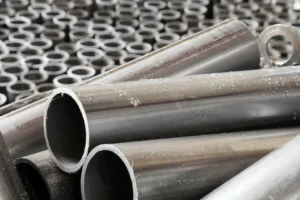
ern-stainless-steel-tube-design.webp "Modern Stainless Steel Tube Design")
Many in the industry are familiar with Ra, the arithmetic average of the roughness profile. It's a useful, general-purpose metric. However, it can also be misleading. A surface with smooth, rolling waves can have the same Ra value as a surface with sharp, isolated peaks, but their functional performance will be drastically different. This is where Rz becomes indispensable. Because it focuses on the extreme heights and depths, Rz gives you a better understanding of a surface's potential wear points, lubrication retention, and sealing capabilities. I remember a client in the automotive sector who was experiencing premature gasket failure. Their specifications only called for a specific Ra value. After we analyzed the parts, we found that while the Ra was in spec, the Rz value was extremely high due to machining chatter, creating sharp peaks that were cutting the gaskets. By shifting their procurement specification to include a maximum Rz value, they solved the issue entirely. This highlights how Rz is not just a number; it's a direct predictor of performance and durability.
Rz vs. Ra: A Practical Comparison
The choice between Rz and Ra depends entirely on the application's functional requirements. For general aesthetics, Ra might be sufficient. But for high-performance components where friction, wear, and sealing are critical, Rz provides the necessary detail.
| Параметр | Measurement Focus | Best For | Potential Weakness |
|---|---|---|---|
| Ra | Arithmetic average height | General surface quality control | Can hide isolated peaks/valleys |
| Rz | Average of max peak-to-valley heights | Wear resistance, sealing surfaces | More sensitive to scratches/dirt |
What Are the Current Industry Standards for Rz?
Global sourcing often creates confusion around standards. Mismatched standards lead to rejected parts and painful supply chain delays. Key international standards like ISO 4287 provide a common language for everyone.
The primary international standard governing Rz is ISO 4287:1997, which defines the parameters for surface texture. Other regional or industry-specific standards, such as those from ASME in North America or JIS in Japan, often reference or align with these ISO principles for global compatibility.

In a globalized supply chain, a shared understanding of quality is non-negotiable. ISO 4287 serves as that foundational "common language" for surface roughness. It ensures that when we at MFY discuss an Rz value of 4.0 µm with a client in Germany or an engineer in Brazil, we are all talking about the same thing, measured in the same way. However, the complexity of global trade means we must also be aware of regional standards. For instance, the American Society of Mechanical Engineers (ASME) has its B46.1 standard, which is dominant in North America. While it largely harmonizes with ISO, there can be subtle differences in interpretation or application. The challenge for any global business is to navigate these differences. To ensure efficient and consistent operations, our policy at MFY is to always specify the standard clearly in our contracts—typically defaulting to ISO unless a customer requires a specific regional equivalent. This transparency is essential for building trust and preventing the costly misunderstandings that arise from assuming everyone is on the same page. A unified Rz standard, backed by transparent quality control, is the bedrock of a reliable international supply chain.
Navigating Global Standards
Understanding the primary standards is crucial for clear communication in procurement. Here’s a quick overview:
| Standard | Region/Body | Key Focus |
|---|---|---|
| ISO 4287 | International | Globally recognized definitions for profile parameters like Rz. |
| ASME B46.1 | North America | Comprehensive standard for surface texture, largely harmonized with ISO. |
| JIS B 0601 | Japan | Japanese Industrial Standard, also closely aligned with ISO principles. |
What Challenges Arise in Measuring and Maintaining Rz Standards?
Achieving consistent Rz values is difficult. Inconsistencies can halt production, inflate costs, and damage supplier relationships. Understanding the challenges in measurement and process control is the first step to overcoming them.
Key challenges include equipment calibration errors, operator variability, the influence of material properties, and environmental factors like vibration. Maintaining consistent Rz standards across a complex global supply chain with different suppliers and quality control processes further complicates enforcement and verification.

The theory of measuring Rz is straightforward, but the practice is filled with potential pitfalls. I once worked with a new supplier who was providing us with stainless steel sheets. The initial samples were perfect, but the first mass-production batch showed wildly inconsistent Rz values. We sent an engineer to their facility and discovered two core problems. First, their profilometer[^2] was positioned near a large stamping press, and the vibrations were throwing off the sensitive stylus. Second, different shifts had operators using slightly different procedures for cleaning and positioning the samples. These seemingly small issues had a major impact on the final product. This experience underscores the real-world challenges. Beyond the factory floor, these issues are magnified across a global supply chain. You might have one supplier in China and another in India, both claiming to meet the same ISO standard. But without a transparent and unified quality control process, are their measurements truly comparable? This is why at MFY, we invest heavily in supplier audits and standardized reporting to bridge these gaps and ensure the Rz value on a certificate from any of our partners is reliable and repeatable.
Common Measurement Pitfalls
| Вызов | Impact on Rz Measurement | Mitigation Strategy |
|---|---|---|
| Vibration | Falsely high or noisy readings | Isolate measurement equipment from machinery. |
| Operator Error | Inconsistent sample prep or setup | Implement Standard Operating Procedures (SOPs) and training. |
| Calibration Drift | Systematic, inaccurate results | Adhere to a strict, regular calibration schedule. |
| Surface Contamination | Dirt or oil can create false peaks | Mandate and verify cleaning protocols before measurement. |
How Can You Ensure Rz Compliance in Your Procurement Strategy?
Procuring materials to the right specification can feel like a gamble. A wrong spec means wasted money and critical project delays. A robust strategy that combines clear contracts and rigorous verification is the only way to ensure compliance.
Ensure compliance by clearly defining Rz requirements, including the specific standard (e.g., ISO 4287), in all procurement documents. Implement a rigorous supplier qualification process, demand quality control reports with every batch, and conduct independent spot-checks upon delivery.

A solid procurement strategy is your best defense against quality issues. It all starts with absolute clarity. Your purchase order shouldn't just say "smooth finish"; it must specify "Rz max 3.2 µm per ISO 4287," for example. This legal and technical precision removes all ambiguity. The next step is vetting your partners. Before we onboard any new supplier at MFY, we conduct a thorough qualification process that includes an audit of their quality control capabilities. We look at their equipment, their calibration records, and their operator training programs. Once a supplier is approved, the verification doesn't stop. We require a material test certificate (MTC) and a detailed surface roughness report with every single shipment. Finally, trust but verify. We regularly pull samples from incoming shipments and run our own tests in our lab. This closed-loop system creates accountability and ensures that the standards we demand are the standards we receive. This isn't about micromanagement; it's about building a resilient supply chain where quality is a shared and measurable responsibility.
The Rz Procurement Checklist
| Step | Action Item | Назначение |
|---|---|---|
| 1. Specify | Define Rz value, tolerance, and governing standard (e.g., ISO 4287) in the PO. | Eliminates ambiguity and creates a contractual obligation. |
| 2. Qualify | Audit potential suppliers' measurement equipment and QC processes. | Ensures the supplier has the capability to meet your specs. |
| 3. Require | Mandate a detailed surface roughness report with every shipment. | Provides batch-level traceability and data for verification. |
| 4. Verify | Conduct random, in-house testing on incoming materials. | Confirms supplier data and maintains accountability. |
What Technical Improvements Can Enhance Rz Measurement Accuracy?
Traditional measurement methods are often slow and prone to human error. This not only compromises quality but also creates bottlenecks in production. Adopting modern digital and automated technologies provides a powerful solution.
To improve accuracy, adopt digital inspection technologies like non-contact optical profilometers and automated measurement systems integrated into the production line. These tools minimize human error, provide real-time data for process control, and create a verifiable digital record for quality assurance.
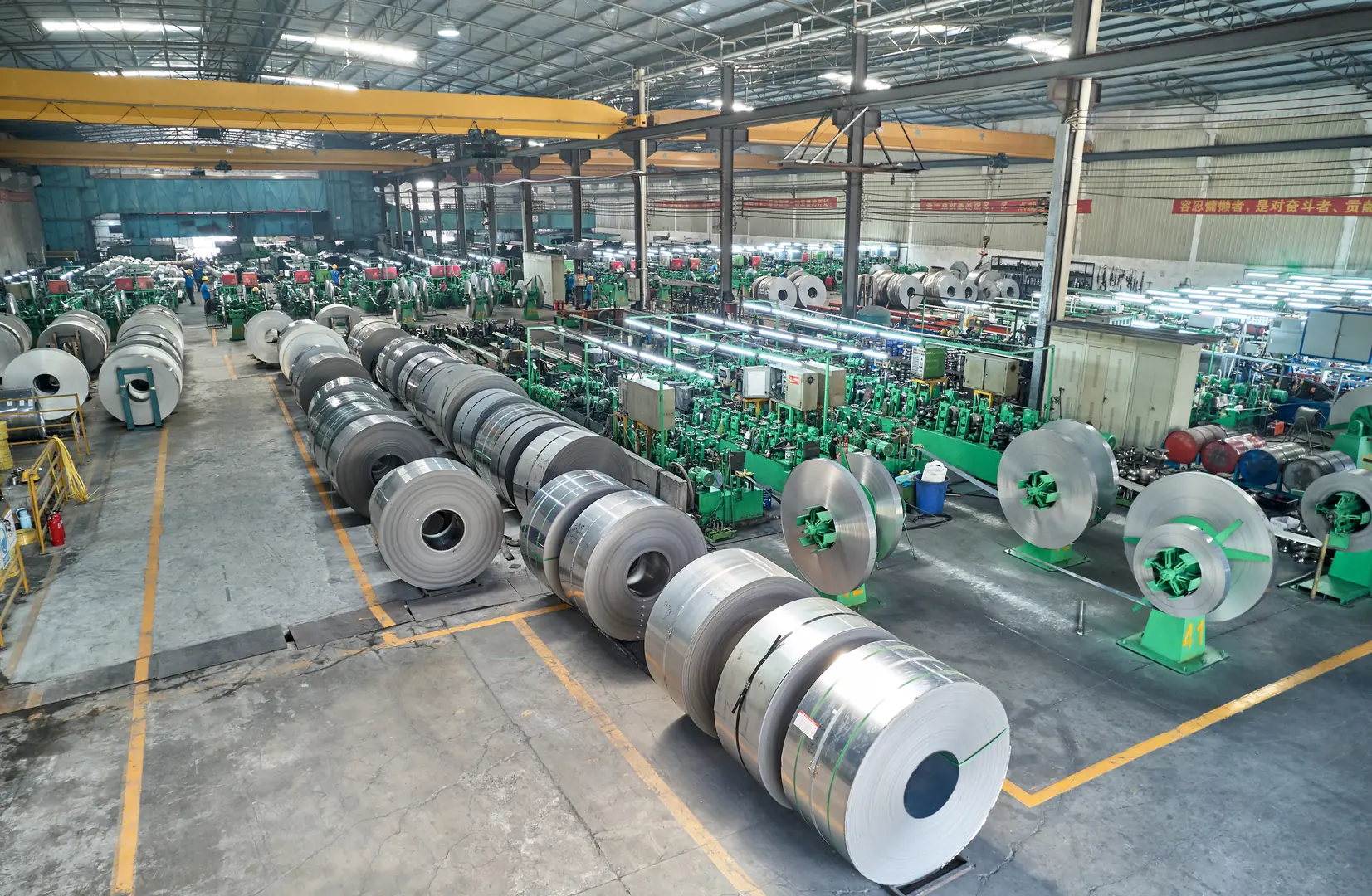
The future of quality control is digital and automated. While traditional stylus profilometers are still effective, they have limitations. They are relatively slow, and the physical stylus can potentially scratch very delicate surfaces. The industry is rapidly moving towards non-contact technologies, such as laser scanning and optical profilometry. These methods are incredibly fast, highly accurate, and can generate detailed 3D maps of a surface. The real game-changer, however, is integrating these systems directly into the production line. Imagine a sensor that scans the surface of a stainless steel coil in real-time as it's being processed. If the Rz value starts to drift out of spec, the system can instantly alert operators or even make automatic adjustments to the machinery. This is no longer science fiction; it's a reality in advanced manufacturing facilities. By adopting these digital inspection technologies, companies can move from a reactive quality control model (finding defects after the fact) to a proactive quality assurance model (preventing defects from happening). This is how you maintain a competitive edge in the global market for high-performance materials.
Traditional vs. Modern Measurement
| Method | Technology | Speed | Data Output |
|---|---|---|---|
| Traditional | Contact Stylus Profilometer | Slow | 2D Profile (Line) |
| Modern | Non-Contact Optical/Laser | Very Fast | 3D Surface Map |
| Automated | In-line Sensor Systems | Real-Time | Continuous Data Stream |
Заключение
Mastering the Rz value is vital for product performance and durability. Strict adherence to standards like ISO 4287, combined with a robust procurement strategy and modern measurement technology, is essential. This discipline reduces costs, enhances quality, and secures your competitive advantage in a demanding global marketplace.
У вас есть вопросы или нужна дополнительная информация?
Свяжитесь с нами, чтобы получить индивидуальную помощь и квалифицированный совет.





 Русский
  English