The Ultimate Guide to Mirror-Polished Stainless Steel Tubing: Selection & Bulk Sourcing
Sourcing the right mirror-polished tubing is challenging. A poor choice compromises your project's look and longevity. This guide provides a clear, five-step process for success.
Mastering the sourcing of mirror-polished stainless steel tubing involves understanding its benefits, evaluating key selection factors like grade and finish, identifying reliable suppliers, verifying quality standards, and implementing efficient bulk procurement practices to ensure consistency and value.

Let's break this down. In my years as Global Business Director at MFY, I've seen that treating this process as a strategic decision, not just a purchase, is what separates successful projects from the rest. It's about viewing these components as assets that enhance your brand and operational excellence. Follow these five steps to turn your sourcing into a competitive advantage.
Why Should You Understand the Benefits of Mirror-Polished Stainless Steel Tubing?
You might see mirror-polished tubing as just a shiny component. This overlooks its strategic value for your business. Understanding its full benefits unlocks new levels of quality and appeal.
Understanding the benefits is crucial because it goes beyond aesthetics. It impacts product longevity through superior corrosion resistance, ensures hygiene in sensitive applications, and elevates your brand's perceived value, justifying the investment.
When we talk about mirror-polished tubing, we are discussing a product that sits at the intersection of art and engineering. It's easy to focus on the flawless, reflective surface, but the real value is much deeper. At MFY, we encourage our partners to think of this material not as a commodity, but as a statement of quality that reflects directly on their own brand. For businesses in architecture, high-end furniture, or automotive design, the visual impact is a powerful tool for differentiation. It communicates precision, luxury, and attention to detail before a single word is spoken. But the advantages are just as significant on a functional level, which is where operational efficiency comes into play.
Beyond the Shine: Aesthetic Impact
The first impression is often the most lasting. A mirror finish on stainless steel provides a clean, modern, and sophisticated look that is difficult to replicate. This isn't just about making something look good; it's about building perceived value. I recall a client in the marine industry who switched to our mirror-polished 316L tubing for their yacht railings. They reported that not only did the product withstand the harsh saltwater environment better, but their customers frequently commented on the premium feel of the finish, directly contributing to a stronger brand image and higher customer satisfaction.
Functional Excellence: The Practical Advantages
The polishing process that creates the mirror finish does more than just improve appearance. It creates an incredibly smooth, non-porous surface. This smoothness minimizes the areas where corrosive agents or bacteria can cling and grow. This is why you see mirror-polished tubing in industries with stringent hygiene standards, like food processing, pharmaceuticals, and medical equipment manufacturing. The surface is exceptionally easy to clean and sterilize, reducing maintenance costs and ensuring compliance. Furthermore, the removal of surface imperfections during polishing enhances the steel's natural chromium oxide layer, significantly boosting its corrosion resistance. This means longer life, less replacement, and better long-term value for any project.
What Key Factors Should You Consider When Selecting Mirror-Polished Tubing?
Choosing the wrong tubing specs can lead to project failure. The details feel overwhelming and complex. Focusing on a few key factors ensures you get the perfect fit every time.
When selecting tubing, you must consider the stainless steel grade (e.g., 304 vs. 316), the required finish or grit level, wall thickness, and outer diameter. These factors directly influence performance, cost, and suitability for your specific application.
Getting the technical specifications right is the foundation of a successful project. A small mistake here can have major consequences down the line. I once worked with a construction contractor for a coastal hotel who initially specified Grade 304 tubing for outdoor balconies to save on costs. I advised them that the high-saline environment would quickly lead to corrosion. We shifted the order to Grade 316, and while the initial cost was higher, it saved them from a massive replacement expense and potential reputation damage within a few years. This is why a deep dive into the core factors is not just recommended; it's essential. It’s about matching the material's properties to the demands of the environment and the application.
Choosing the Right Grade
The grade of stainless steel is perhaps the most critical choice. For mirror-polished tubing, the decision usually comes down to 304 or 316. While they look identical when polished, their chemical compositions and performance differ significantly.
| Характеристика | Grade 304 | Grade 316 |
|---|---|---|
| Composition | 18% Chromium, 8% Nickel | 16% Chromium, 10% Nickel, 2% Molybdenum |
| Устойчивость к коррозии | Good for general applications | Excellent, especially against chlorides |
| Common Use Cases | Indoor architectural, decorative, food equipment | Marine, chemical processing, coastal structures |
| Стоимость | Нижний | Выше |
Choosing Grade 304 for an indoor decorative project is a smart, cost-effective decision. Using it for a boat railing is a costly mistake waiting to happen.
Defining the Perfect Finish and Dimensions
The term "mirror polish" can be subjective. In the industry, we define it by grit. A standard mirror finish is typically achieved with polishing up to a #8 grade, which results in a highly reflective, non-directional surface with a high degree of image clarity. It's crucial to specify the required finish to ensure consistency, especially in bulk orders. Equally important are the physical dimensions: the outer diameter (OD) and the wall thickness. These must be specified with precise tolerances to ensure the tubing fits and functions correctly within your assembly, whether it's for a structural frame or a fluid transport system.
How Do You Identify Reliable Suppliers for Bulk Sourcing?
Finding a supplier seems easy, but many can't deliver quality at scale. A partnership fails, and your production line stops. A reliable supplier is more than a low price.
Identify reliable suppliers by evaluating their supply chain integration, production capacity, and industry track record. Look for partners who offer transparency, consistent quality control, and can manage complex logistics for bulk orders, ensuring a stable supply.
In the global steel market, a low price can often be a red flag. True value comes from reliability, consistency, and a partner who understands your business needs. This is where you must look beyond the quote and investigate the supplier's operational capabilities. A reliable partner is an extension of your own team, working to ensure your projects succeed. They are not just selling you steel; they are providing a service that underpins your production. I remember a client in Germany who was struggling with inconsistent finishes from their previous supplier. It was causing production bottlenecks. We walked them through our integrated process at MFY, from raw material sourcing to the final polishing and export packaging. That transparency gave them the confidence to switch, and we’ve been partners ever since.
Look Beyond the Price Tag
Your supplier's stability is your stability. Ask potential partners about their production capacity. Can they handle your peak demand without sacrificing quality or lead times? Request references or case studies from businesses in your industry. A supplier with a proven track record of delivering high-volume, high-quality orders on time is invaluable. Also, consider their communication and service. A responsive partner who can provide quick updates and solve problems is essential for managing the complexities of international trade.
The Power of an Integrated Supply Chain
A supplier with a fully integrated supply chain[^1], like MFY, offers significant advantages. When a company controls the process from raw materials to finished product, they have greater control over quality, cost, and lead times. This integration means better traceability and accountability. It also creates resilience. If there is a disruption in one part of the market, an integrated supplier often has the flexibility to adapt and keep your orders on track. This model moves the relationship from a simple transaction to a strategic partnership, where your supplier is invested in your long-term success.
How Can You Evaluate Quality Standards in Mirror-Polished Tubing?
You've received a bulk order, but the quality is inconsistent. Now you face costly delays and rejections. Knowing how to evaluate quality upfront prevents these expensive problems.
Evaluate quality by requesting material test certificates (MTCs), checking for adherence to international standards like ASTM, and specifying key metrics such as surface roughness (Ra). A visual inspection for uniformity and defects is also critical for mirror-finished products.

For a product where aesthetics and performance are paramount, quality cannot be an afterthought. It must be built into the procurement process from the very beginning. Inconsistent quality in a bulk order can be disastrous, leading to project delays, budget overruns, and damage to your reputation. The key is to establish clear, measurable quality standards with your supplier before a single tube is produced. This isn't about being difficult; it's about being professional and ensuring you get exactly what you paid for. At MFY, we welcome this scrutiny because it demonstrates our commitment to excellence and builds trust with our clients. A good supplier will have a robust quality assurance process and will be happy to provide the necessary documentation to prove it.
The Non-Negotiables: Certifications and Standards
Never accept a bulk order without the proper documentation. The most important document is the Material Test Certificate (MTC)[^2] or Mill Test Report (MTR). This document provides a complete chemical and mechanical analysis of the steel heat lot used to produce your tubes, verifying that it meets the specified grade (e.g., 304 or 316). Additionally, ensure your supplier adheres to recognized international standards, such as those from ASTM International (e.g., ASTM A554 for welded ornamental tubing). These standards provide a common language for quality and ensure a baseline of performance.
A Practical Checklist for Quality Assurance
Beyond certifications, you need a practical checklist for inspecting shipments.
| Quality Check | What to Look For | Why It Matters |
|---|---|---|
| Visual Inspection | Uniform reflectivity, no scratches, pits, or haze. | Ensures aesthetic consistency and brand quality. |
| Dimensional Tolerance | Verify OD, wall thickness, and length against specs. | Guarantees proper fit and function in assemblies. |
| Surface Roughness (Ra) | Use a profilometer if required for technical apps. | Quantifies smoothness, critical for hygiene/flow. |
| Packaging | Individual sleeves, sturdy crates. | Prevents damage during shipping and handling. |
What Are the Best Practices for Efficient Bulk Procurement?
Managing bulk orders can be a logistical nightmare. Miscommunication and poor planning lead to missed deadlines. Streamlining your procurement process saves time, money, and stress.
Best practices for bulk procurement include establishing a long-term partnership with your supplier, clearly defining specifications in your purchase order, understanding lead times and logistics, and leveraging your supplier's inventory to maintain supply chain agility.
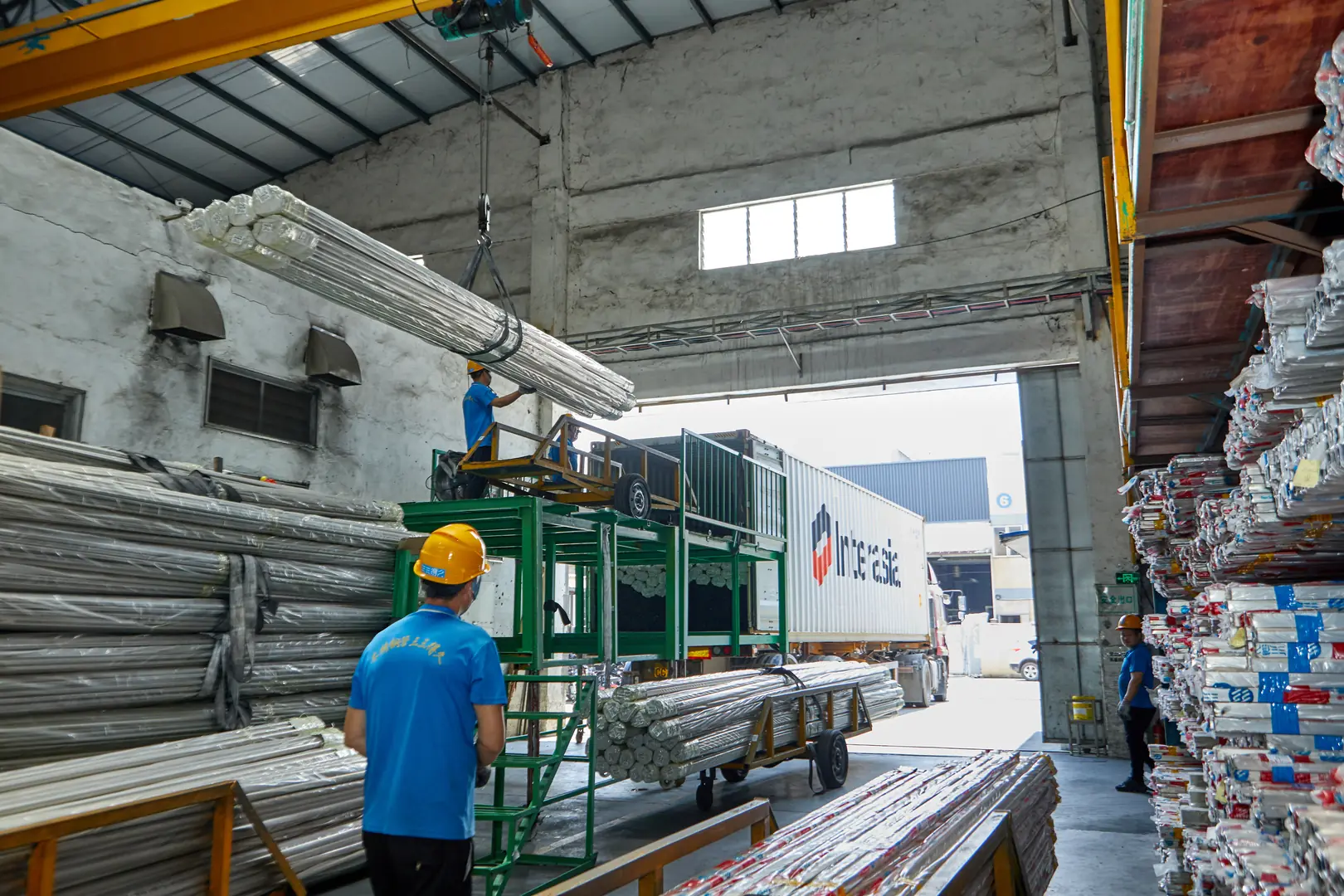
Efficient procurement is the final piece of the puzzle. This is where a strong strategy can deliver a significant competitive advantage by ensuring a smooth, predictable flow of materials to your production lines. The goal is to move away from reactive, last-minute ordering and toward a proactive, partnership-based approach. This shift minimizes risks, optimizes costs, and frees up your team to focus on their core work instead of constantly fighting supply chain fires. The most successful companies I work with view procurement not as a cost center, but as a strategic function that enables growth and stability. They build strong relationships with suppliers who can provide not just materials, but also market insights and logistical support.
From Purchase Order to Strategic Partnership
The most efficient procurement happens within a long-term relationship. When a supplier understands your annual demand, your project cycles, and your quality expectations, they can better plan their production and inventory to serve you. This can lead to better pricing, prioritized production slots, and a more collaborative approach to problem-solving. Instead of just sending a purchase order, engage in regular communication. Share your forecasts. Discuss upcoming projects. A true partner will use this information to create a more resilient and responsive supply chain for you.
Mastering Logistics and Lead Times
For bulk international orders, logistics are just as important as the product itself. A good supplier will be transparent about production lead times and shipping schedules. Work with them to understand the entire timeline, from order confirmation to final delivery. Factor in time for production, packaging, freight, and customs clearance. At MFY, we have a dedicated export team that manages this entire process, providing our clients with a single point of contact and clear visibility. Furthermore, discuss inventory strategies. A supplier with strong inventory levels can often ship standard items quickly, providing you with the agility to respond to unexpected demand without having to hold excessive stock yourself.
Заключение
Mastering the selection and sourcing of mirror-polished tubing transforms it from a mere component into a strategic asset. By focusing on quality, supplier reliability, and smart procurement, you enhance your projects, strengthen your brand, and build a more resilient and competitive business.
У вас есть вопросы или нужна дополнительная информация?
Свяжитесь с нами, чтобы получить индивидуальную помощь и квалифицированный совет.




 Русский
  English