Stainless Steel Tube Inspection: ISO Certified Quality Control Checklist
Inconsistent tube quality can derail your project. This leads to costly rework, safety risks, and reputational damage. A systematic ISO-certified checklist[^1] is your best defense for ensuring quality.
Mastering stainless steel tube inspection involves a systematic, five-step ISO-certified process: understanding requirements, preparing tools, conducting visual checks, performing dimensional and mechanical tests, and documenting all results for full compliance. This ensures product integrity and reliability in your supply chain.
In my role as Global Business Director at MFY, I've seen firsthand how a disciplined approach to quality control separates the leaders from the laggards. It's not about just ticking boxes; it's about building a foundation of trust and reliability that underpins your entire operation. A rigorous inspection process is your guarantee against material failure and your ticket to accessing the most demanding global markets. Let's break down this process step-by-step, transforming your quality control from a challenge into a strategic advantage.
What Are the Core ISO Requirements for Stainless Steel Tubes?
Navigating ISO standards can feel complex. Misinterpreting them risks non-compliance and rejected materials. Understanding the core tenets simplifies the entire quality control process from the start.
The core ISO requirements for stainless steel tubes focus on material traceability, chemical composition, mechanical properties (like tensile strength and hardness), and strict dimensional tolerances. These standards ensure consistency and safety across global supply chains.
At MFY, we view ISO compliance not as a hurdle, but as our fundamental promise to the client. It’s the language of quality that is understood globally. While ISO 9001 provides the overarching Quality Management System (QMS) framework, specific product standards dictate the technical requirements. For example, standards like EN 10217-7[^2] for welded tubes or ASTM A269 for seamless tubing define the precise criteria that a product must meet. Understanding these isn't just about passing an audit; it's a strategic move. Adherence to these standards is what allows companies to enter new, highly regulated markets and build unshakeable customer trust. It demonstrates a commitment to excellence that goes far beyond the product itself, signaling that you are a reliable, long-term partner. This is the strategic advantage that turns quality control from a cost center into a powerful business driver.
Key ISO Pillars for Tube Inspection
The requirements can be grouped into several key areas, each one critical for ensuring the final product is fit for purpose. From the initial raw material to the final dimensional check, every step is designed to prevent failure.
| ISO Requirement Area | Назначение | Common Standards Referenced |
|---|---|---|
| Material Traceability | Links the final tube back to its original heat or melt for full accountability. | EN 10204, ISO 9001 |
| Chemical Composition | Verifies the correct grade of stainless steel (e.g., 304, 316L) was used. | ASTM A751, EN 10088-2 |
| Mechanical Properties | Confirms the material will perform as expected under stress and strain. | ASTM A370, ISO 6892-1 |
| Dimensional Tolerances | Ensures the tube will fit and function correctly within an assembly. | ASTM A1016, EN ISO 1127 |
Strategic Implications of Compliance
For any contractor or manufacturer, proving ISO compliance is your passport to bigger and better projects. It’s a non-negotiable for sectors like aerospace, petrochemicals, and pharmaceuticals where failure is not an option. By embedding these standards into your inspection process, you are actively mitigating risk and enhancing your brand's reputation for quality and reliability.
How Do You Prepare Your Tools and Environment for Accurate Inspection?
Inaccurate tools deliver faulty data. This can lead to accepting bad products or rejecting good ones. Proper preparation and calibration are essential for reliable inspection outcomes.
Prepare for inspection by gathering calibrated measuring tools like calipers, micrometers, and ultrasonic thickness gauges. Ensure a well-lit, clean, and organized inspection area to prevent errors and facilitate a thorough examination of the tubes.
The principle of "garbage in, garbage out" applies perfectly to quality inspection. The most skilled inspector is powerless if their tools are not accurate. I remember a case years ago with a client in India; their team was struggling with inconsistent wall thickness readings on a batch of pipes. They were ready to reject the entire shipment. We flew in an engineer who discovered the issue wasn't the tubes, but their own uncalibrated micrometers. A simple calibration exercise saved them a fortune and a major project delay. This is why at MFY, our internal protocols mandate daily and weekly calibration checks on all critical measuring equipment. It's a non-negotiable discipline that eliminates variables and ensures the data we collect is a true reflection of the product's quality.
Essential Inspection Toolkit
Your toolkit should be comprehensive and, above all, calibrated. Using tools with expired calibration stickers is the same as using no tools at all.
| Tool | Назначение | Recommended Calibration Frequency |
|---|---|---|
| Digital Caliper | Measures outer diameter (OD), length, straightness. | Monthly |
| Micrometer | Provides precise wall thickness measurements. | Monthly |
| Ultrasonic Thickness Gauge | Non-destructively measures wall thickness. | Weekly or Before Each Use |
| Go/No-Go Gauges | Quickly checks if diameters are within tolerance. | Annually |
| Tape Measure | Measures overall tube length. | Annually |
Optimizing the Inspection Environment
Your surroundings are just as important as your tools. A poorly lit or cluttered space is a recipe for missed defects and inaccurate measurements. A dedicated inspection area should be clean, organized, and feature bright, non-glare lighting to make surface imperfections easy to spot. A stable, flat surface is also critical for accurate dimensional checks.
What Should You Look For During a Visual Inspection?
Hidden surface defects can compromise tube integrity. Overlooking them leads to premature failure under pressure or corrosion. A trained eye knows exactly what signs to spot.
During a visual inspection, look for surface imperfections like scratches, cracks, pits, dents, and gouges. Also check for discoloration indicating improper heat treatment and examine the weld seam (if applicable) for uniformity and completeness.
Visual inspection is your first and most effective line of defense. It's fast, requires minimal equipment, and a well-trained inspector can identify the vast majority of common production issues before they ever reach the more time-consuming testing stages. Think of it as the triage stage in a hospital emergency room—it quickly sorts the healthy from the problematic. You must be systematic, checking not only the outer diameter (OD) but also the inner diameter (ID) surface, which is often where corrosion issues begin. For welded tubes, the weld seam itself tells a story. A clean, uniform weld indicates a high-quality production process, while defects like undercut or spatter suggest problems that could compromise the tube's strength and corrosion resistance. This initial check is crucial for maintaining efficiency in the QC workflow.
Surface Defect Checklist
Train your team to spot these common red flags. Each one points to a potential weakness in the material's integrity.
| Defect | Описание | Potential Risk |
|---|---|---|
| Питтинг | Small, localized holes on the surface. | Starting point for corrosion. |
| Cracks | Fine lines or fractures on the surface. | Catastrophic failure under pressure or stress. |
| Scratches/Gouges | Grooves or marks that remove material. | Weakens the tube wall; can initiate cracks. |
| Discoloration | Blue or brown tinting on the surface. | Indicates improper heat treatment (annealing). |
Inspecting the Weld Seam
For welded tubes, the weld is often the most critical point. A visual check should confirm that the weld bead is consistent, fully fused with the base metal, and free from defects like porosity (small holes) or undercut (a groove at the edge of the weld), as these can severely weaken the tube.
Which Dimensional and Mechanical Tests Are Absolutely Critical?
A tube that looks good may not fit or perform. Incorrect dimensions or weak material properties cause catastrophic failures. Quantitative testing provides the objective proof of quality you need.
Critical tests include measuring the outer diameter, wall thickness, and length for dimensional accuracy. Key mechanical tests involve tensile testing for strength and elongation, hardness testing for durability, and hydrostatic or eddy current testing for leak-proof integrity.
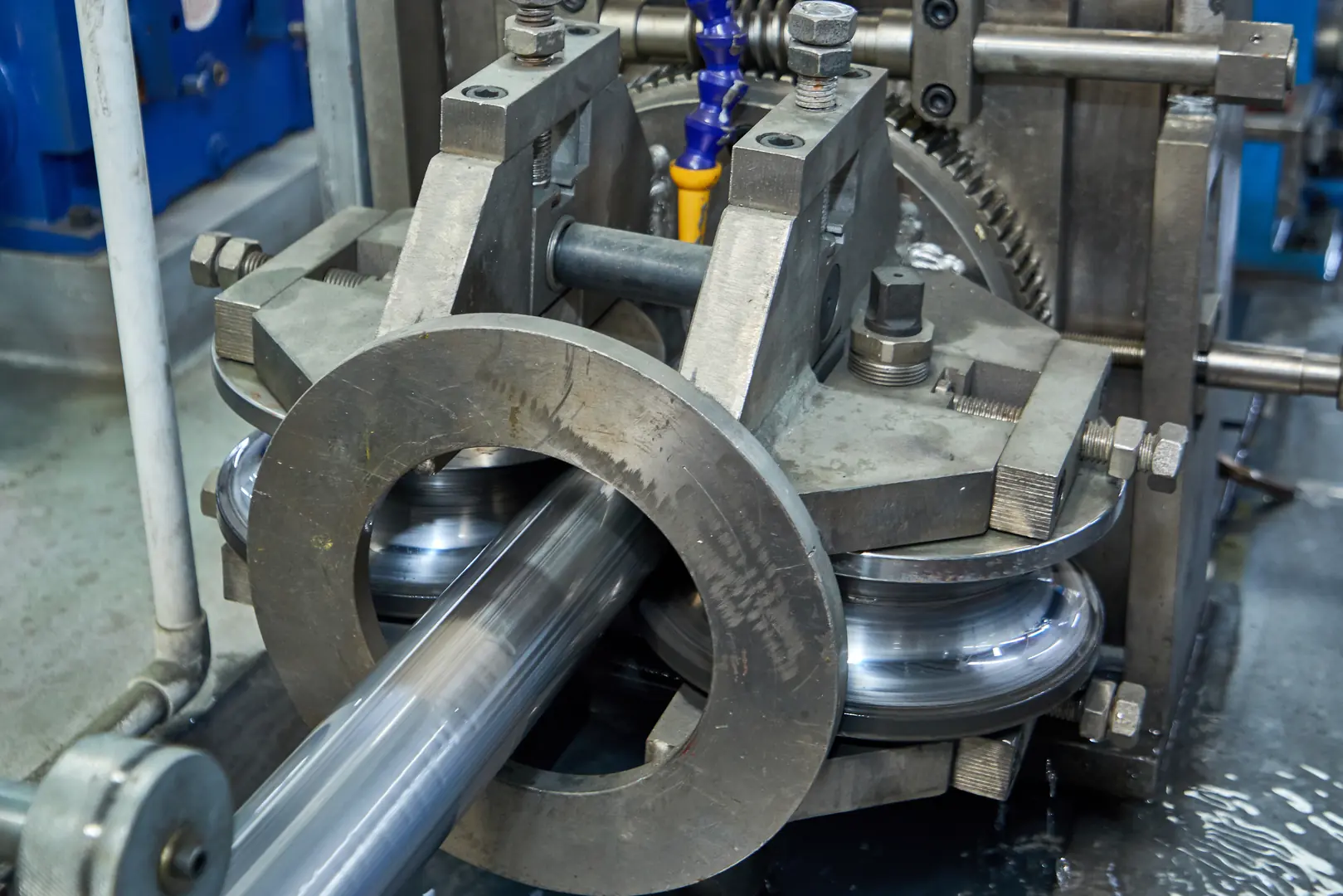
This is where we move from observation to objective data. Visual inspection is subjective; mechanical and dimensional testing provides the hard numbers that prove a tube meets its specified standard. This is paramount in high-stakes industries where precision is everything. I'll never forget a client in the petrochemical sector who thanked us after a project. Our rigorous hydrostatic test[^3]ing had identified a micro-fissure, invisible to the naked eye, in a tube destined for a high-pressure line. Finding that defect in our facility prevented what could have been a dangerous and incredibly costly failure in theirs. This is why these tests are not optional. They are the ultimate confirmation that the product is safe, reliable, and fit for purpose. They validate the material's strength, durability, and ability to hold up under real-world operating conditions.
Verifying Dimensional Tolerances
Fit and function depend on getting the dimensions right, every time. Even a millimeter of deviation can render a tube useless in a precision assembly.
| Test | Tool(s) Used | Importance |
|---|---|---|
| Наружный диаметр (OD) | Digital Caliper, Go/No-Go Gauge | Ensures proper fit in clamps and fittings. |
| Толщина стенок | Micrometer, UT Gauge | Critical for pressure rating and structural integrity. |
| Length | Tape Measure | Guarantees it meets project specifications. |
| Прямолинейность | Straight Edge, Feeler Gauge | Prevents issues with alignment and installation. |
Confirming Mechanical Properties
These tests confirm the material itself has the required strength and integrity.
- Tensile Test: A sample is pulled until it breaks to measure its ultimate tensile strength and elongation. This confirms the material's strength and ductility.
- Hardness Test (Rockwell or Vickers): Measures the material's resistance to indentation, indicating its durability and resistance to wear.
- Hydrostatic Test: The tube is filled with water and pressurized to a level far beyond its operating pressure to ensure it is 100% leak-proof.
- Eddy Current Test (NDT): A non-destructive method used to detect tiny surface and sub-surface flaws in the material.
How Can You Ensure Proper Documentation and ISO Compliance?
An inspection without records is just an opinion. Lack of documentation creates traceability gaps and compliance risks. Proper reporting turns your quality efforts into certified proof.
Ensure compliance by creating a detailed inspection report for each batch. This report must include test results, inspector details, date, and reference the specific ISO standards met. This documentation provides full traceability and serves as the official quality certificate.
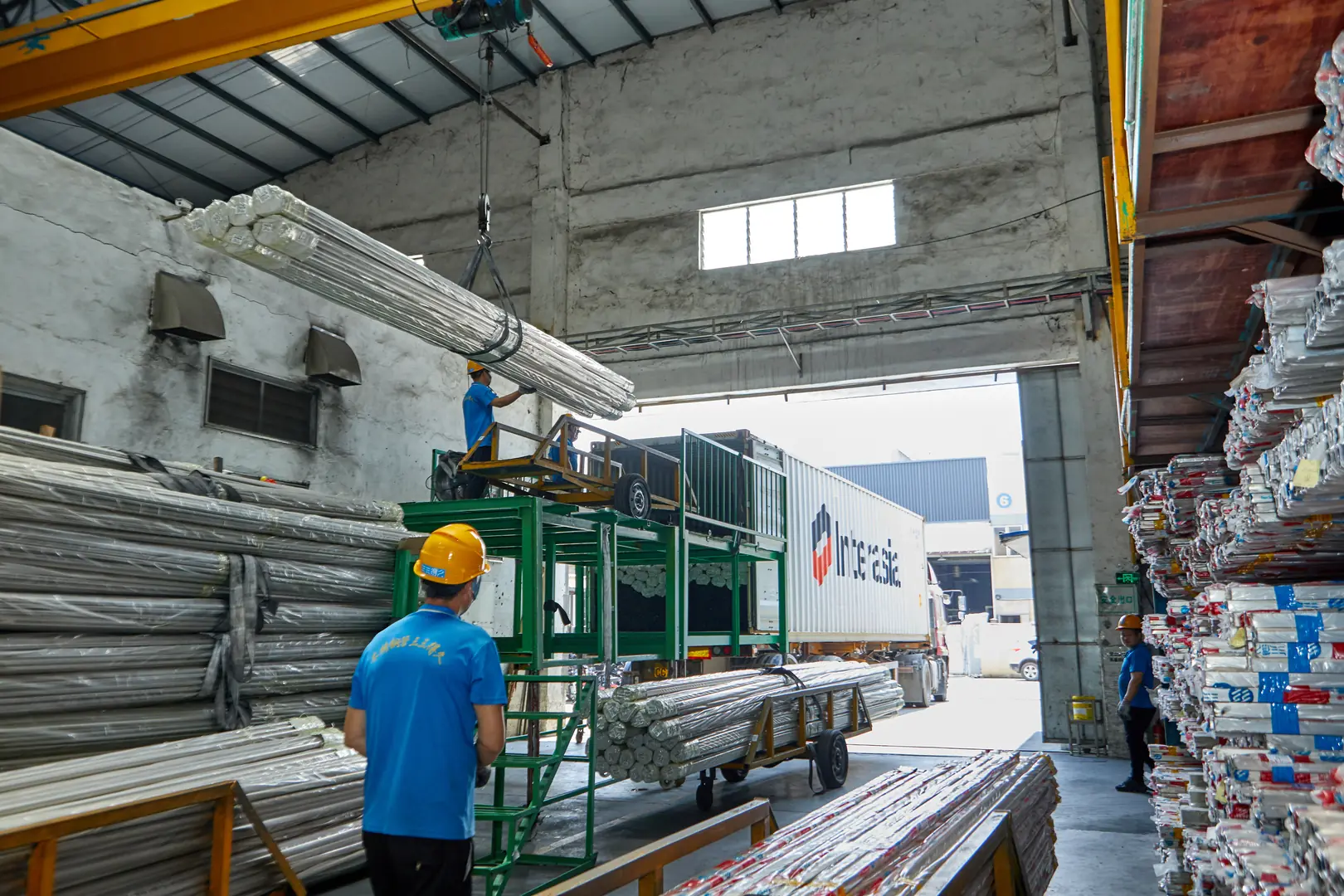
Documentation is the final, critical step that closes the quality loop. It provides the transparency and accountability that modern supply chains demand. Without it, all your previous efforts are unproven. The primary document here is the Mill Test Certificate (MTC)[^4], often certified to EN 10204 3.1. This document is not just a piece of paper; it is the tube's birth certificate and resume rolled into one. It provides a complete, traceable record from the raw material melt all the way through to the final inspection results. This is how we at MFY provide our clients with total confidence. Looking forward, digitalization is transforming this space. We are actively integrating QR codes on our products that link directly to a secure, cloud-based digital MTC. This gives our clients instant, on-site access to all quality data with a simple scan of their phone, aligning with the industry's move toward smart manufacturing and enhanced traceability.
Components of a Mill Test Certificate (MTC)
A compliant MTC is non-negotiable and must contain specific, verifiable information.
| MTC Component | Назначение |
|---|---|
| Manufacturer/Supplier Info | Clearly identifies the source of the product. |
| Heat Number | The unique code that traces the tube back to its original steel melt. |
| Product Specifications | Lists the grade (e.g., 316L), dimensions, and relevant standard (e.g., ASTM A269). |
| Chemical Composition | A detailed breakdown of the elemental analysis, proving the grade. |
| Mechanical Test Results | The actual data from the tensile, hardness, and other required tests. |
| Compliance Statement | A declaration that the product conforms to the specified standards. |
| Authorized Signature | The mark of accountability from the quality manager. |
Заключение
Ultimately, a robust, ISO-certified inspection checklist is not a cost—it's a strategic investment. It ensures product integrity, builds customer trust, and secures your supply chain's reputation for excellence. It’s the MFY way of delivering reliability, every single time.
У вас есть вопросы или нужна дополнительная информация?
Свяжитесь с нами, чтобы получить индивидуальную помощь и квалифицированный совет.


 Русский
  English