Internal Surface Finish & Roughness Measurement: Ra Standards & Precision
Struggling with inconsistent component performance? This variability often traces back to overlooked surface details, costing you time and money. Understanding precision measurement is your first step toward guaranteed quality.
Precision in internal surface finish measurement, particularly using Ra standards, is critical because it directly impacts a component's corrosion resistance, lifespan, and overall performance in high-stakes industrial applications like aerospace, medical, and food processing.

As the Global Business Director at MFY, I've seen firsthand how the smallest details can make the biggest difference. The texture of a surface, often invisible to the naked eye, can be the deciding factor between a product that lasts for decades and one that fails prematurely. This isn't just about aesthetics; it's about fundamental performance and reliability. Let's explore why mastering the measurement of this crucial characteristic is a non-negotiable for any serious player in the industrial materials sector.
What are Ra standards in internal surface finish measurement?
Using vague quality metrics for your components? This ambiguity leads to inconsistent performance and client dissatisfaction. Ra standards provide a clear, universal language for defining and verifying surface texture.
Ra, or Roughness Average, is a globally recognized standard that measures the arithmetic average of the absolute values of the profile height deviations from the mean line. It provides a simple, effective number to quantify surface texture.
Think of Ra as the universal language for surface texture. When a client in Germany specifies an internal finish of Ra 0.8 μm for a stainless steel tube, we at MFY know exactly what that means in terms of machining, polishing, and final inspection. It removes guesswork and ensures that the component we deliver will perform precisely as their engineers intended. I remember a client in the food processing industry who was experiencing bacterial buildup in their piping. The problem wasn't the material, but an inconsistent internal finish with a high Ra value, creating microscopic crevices for contaminants. By switching to a supplier who could guarantee a specific, low Ra value, they solved the issue. This is the power of a clear standard.
Understanding the Numbers
The Ra value is not just a technical specification; it's a direct indicator of a component's suitability for its intended application. A lower Ra value signifies a smoother surface, while a higher value indicates a rougher one. The required smoothness depends entirely on the job the component needs to do. For us, matching the right finish to the right application is a core part of our service.
| Ra Value (μm) | Surface Quality | Typical Applications |
|---|---|---|
| > 3.2 | Rough | General structural components, non-critical surfaces |
| 1.6 - 3.2 | Machined | Standard engineering parts, where friction is not a primary concern |
| 0.8 - 1.6 | Ground / Fine Machined | Bearings, sealing surfaces, components requiring moderate precision |
| < 0.8 | Polished / Lapped | Medical implants, food processing equipment, high-performance seals |
How does surface roughness impact the performance of industrial components?
Experiencing unexpected component failures? The unseen enemy is often a rough surface finish, which directly compromises longevity. Understanding its impact is key to building more reliable products.
Surface roughness directly impacts performance by influencing friction, wear, corrosion resistance, and the ability to form a proper seal. Smoother surfaces generally reduce wear and prevent contaminant buildup, significantly extending component life.
The performance of a stainless steel component is fundamentally tied to its surface condition. A rough surface, with its landscape of microscopic peaks and valleys, is far more susceptible to failure than a smooth one. In my experience, two areas are most critical: corrosion and friction. The valleys on a rough surface can trap moisture, chlorides, and other contaminants, creating a perfect environment for pitting and crevice corrosion[^1] to begin. For industries operating in harsh environments, a smooth, low-Ra finish is their best defense. Similarly, when two components move against each other, those microscopic peaks create friction points. This leads to increased wear, higher energy consumption, and eventual mechanical failure. By controlling the surface finish, we are essentially engineering the component's future performance and lifespan from the very start.
The Critical Link: Roughness and Functionality
The link between a surface's Ra value and its real-world performance is direct and measurable. For our clients in demanding sectors, this isn't an academic detail—it's a critical operational parameter. A medical device manufacturer needs an extremely low Ra value on an implant to ensure biocompatibility and prevent infection. An aerospace engineer requires a specific finish on a hydraulic component to guarantee a perfect seal under immense pressure. We see our role as more than just a supplier; we are partners in performance, ensuring the material's surface is perfectly optimized for its function.
| Factor | High Roughness (High Ra) | Low Roughness (Low Ra) |
|---|---|---|
| Устойчивость к коррозии | Lower. Valleys trap contaminants, promoting pitting. | Higher. Smooth surface is easier to clean and resists buildup. |
| Friction & Wear | Higher. Increased contact points lead to faster degradation. | Lower. Reduced friction means less wear and longer operational life. |
| Sealing Capability | Poor. Gaps in the surface prevent a tight, reliable seal. | Excellent. A smooth, uniform surface allows for optimal gasket contact. |
| Fatigue Life | Shorter. Surface imperfections act as stress concentrators. | Longer. A uniform surface distributes stress more evenly. |
What methods are used to measure internal surface roughness accurately?
Struggling to verify the finish inside a pipe or complex part? Inaccurate readings can lead to costly quality escapes. Advanced contact and non-contact methods provide the precision you need.
Accurate internal surface roughness is measured using two primary methods: contact profilometers, which use a diamond-tipped stylus to physically trace the surface, and non-contact optical methods like interferometry, which use light to map the surface.
Choosing the right measurement tool is just as important as the manufacturing process itself. For years, the industry standard has been the contact profilometer. It's a reliable workhorse that gives you a direct, tangible reading by dragging a fine stylus across the surface. We use these daily for standard quality control. However, the game is changing. As specifications become tighter, especially for internal surfaces, non-contact optical methods are becoming essential. These tools use light to create a 3D map of the surface without ever touching it. This is crucial for delicate, highly polished surfaces where a stylus could leave a scratch. At MFY, integrating these advanced measurement technologies allows us to provide a higher level of quality assurance, reduce our inspection times, and offer our clients verifiable data that gives them complete confidence in our products.
Contact vs. Non-Contact: Choosing the Right Tool
The decision between a contact and non-contact measurement system depends on the application's specific needs for accuracy, speed, and surface integrity. Both have their place in a modern quality control department. For MFY, having the flexibility to use both is a key part of our commitment to quality. We can use a fast, non-contact system for real-time process monitoring on the production line and then use a high-precision contact profilometer for final, certified verification. This dual approach ensures we catch any deviations early while still providing the rigorous documentation our clients in sectors like aerospace and medical devices demand. It's this investment in technology that helps us stay ahead and deliver a superior product.
| Method | How It Works | Преимущества | Недостатки |
|---|---|---|---|
| Contact Profilometer | A fine stylus is dragged across the surface, physically measuring peaks and valleys. | Direct measurement, widely accepted standard, less sensitive to surface contaminants. | Can scratch delicate surfaces, slower process, limited to linear traces. |
| Non-Contact Optical | Light (laser, white light) is projected onto the surface, and the reflection is analyzed. | Non-destructive, very fast, can measure a full 3D area, ideal for complex shapes. | Higher initial cost, can be sensitive to surface reflectivity and cleanliness. |
How can precision in roughness measurement improve manufacturing quality?
Is your quality control process reactive, catching defects only after they happen? This approach is inefficient and costly. Precise, real-time roughness data enables proactive control and superior quality.
Precision measurement improves quality by enabling real-time process adjustments, ensuring consistent adherence to specifications, reducing scrap rates, and providing verifiable proof of quality to clients, which builds trust and strengthens brand reputation.

The biggest shift I've seen in manufacturing is the move from simple inspection to intelligent process control. Precision roughness measurement is the heart of this transformation. Instead of just checking a finished part and giving it a pass or fail, we now use measurement data as a live feedback loop. If we see the Ra value on our stainless steel tubes starting to drift, even slightly, we don't wait for it to go out of spec. We know immediately that a cutting tool might be wearing down or a lubricant flow needs adjustment. This proactive approach is a game-changer. It allows us to maintain an incredibly high level of consistency, which is exactly what our clients are paying for. It turns quality control from a cost center into a powerful competitive advantage.
From Data to Dominance: The ROI of Precision
Investing in high-precision measurement technology isn't an expense; it's an investment with a clear return. By catching process deviations early, we dramatically reduce waste and rework. By ensuring every single component is within a tight tolerance band, we build a reputation for reliability that commands loyalty. And most importantly, by having the data to prove our quality, we can confidently serve the most demanding industries in the world. This is how a company reinforces its position in the global market—not just by making a good product, but by proving it with indisputable data, every single time.
| Выгода | Описание |
|---|---|
| Reduced Waste & Rework | Early detection of process drift means fewer rejected parts, saving material and labor. |
| Enhanced Consistency | Products are more uniform, leading to predictable performance and higher customer satisfaction. |
| Stronger Compliance | Verifiable data reports prove adherence to stringent international standards and client specifications. |
| Improved Process Insight | Data trends help predict tool wear and optimize maintenance schedules, preventing downtime. |
What recommendations exist for maintaining optimal surface finish in manufacturing?
Finding it difficult to achieve the right surface finish consistently? This variability can disrupt your production schedule and hurt your bottom line. A systematic approach is the only way to guarantee results.
To maintain an optimal surface finish, manufacturers must meticulously control machining parameters, use the correct high-quality tooling and lubricants, and implement a system of regular, calibrated roughness measurement for continuous process verification.
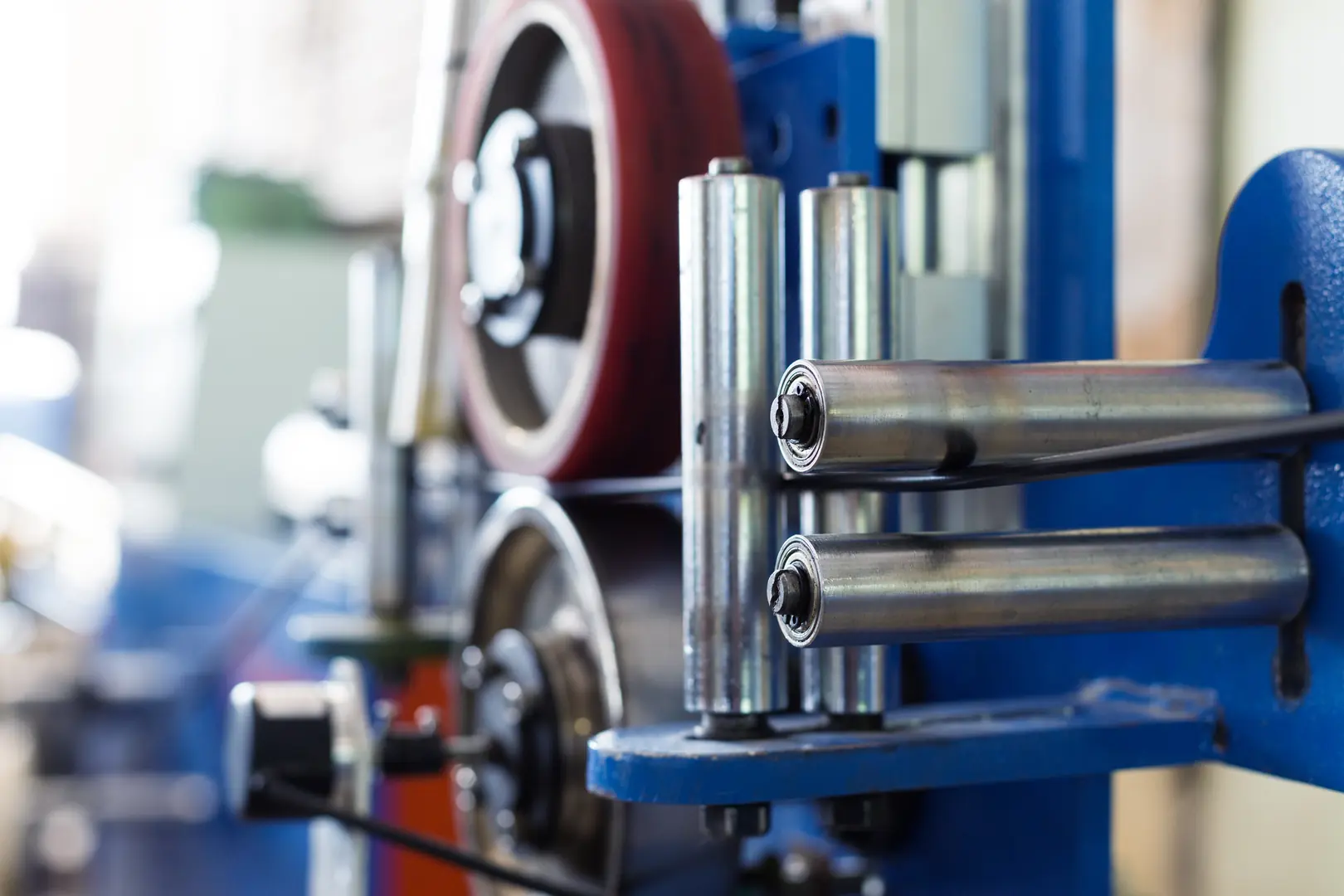
Achieving a perfect surface finish isn't an art; it's a science. There is no single magic bullet. It is the result of controlling a dozen different variables with precision. In my conversations with our production managers, we always come back to the same core principles. It starts with the machine itself—the speeds, the feed rates, the depth of the cut. Then it's about the tools you use; a worn or incorrect cutting insert will never produce a fine finish. Finally, it's about the environment, specifically the coolants and lubricants that reduce heat and friction at the point of contact. You can't master one of these areas and neglect the others. It requires a holistic, systematic approach where every element is optimized and, crucially, monitored. This is the only way to move from inconsistent results to repeatable excellence.
A Blueprint for Excellence
At MFY, our integrated supply chain gives us a unique advantage in controlling these variables. We don't just process steel; we manage the entire journey. This means we have deep insight into how each step affects the next. Based on this experience, our blueprint for maintaining a superior surface finish is built on a foundation of control and feedback. We establish precise parameters for every job, we invest in the best tooling, and we use our advanced measurement systems as a constant feedback loop to verify that the process is performing exactly as designed. This isn't a one-time setup; it's a culture of continuous improvement, where data from our quality checks informs and refines our manufacturing processes every single day. This is how we ensure that the MFY name is synonymous with the highest quality finish in the industry.
Заключение
Mastering internal surface finish is not optional in today's market. Ra standards provide the necessary language, understanding roughness's impact is critical for performance, and using precision measurement as a process control tool is what separates industry leaders from the rest. This focus is our commitment to you.
У вас есть вопросы или нужна дополнительная информация?
Свяжитесь с нами, чтобы получить индивидуальную помощь и квалифицированный совет.






 Русский
  English