Industrial Grade SS Tubing: 2B, 2D, BA Finish Comparison & Bulk Procurement
Struggling to select the right stainless steel tube finish? This choice impacts your project's cost, performance, and appearance. Let us clarify the differences to optimize your procurement process.
The primary difference between 2B, 2D, and BA finishes lies in their surface treatment, resulting in varied reflectivity, roughness, and suitability for different applications. 2B is a general-purpose smooth finish, 2D is a dull matte finish, and BA is a highly reflective, mirror-like finish.

Choosing the correct finish for your industrial-grade stainless steel tubing is more than just an aesthetic decision; it's a strategic one that affects everything from manufacturing efficiency to the final product's durability. As the Global Business Director at MFY, I've seen firsthand how a well-informed choice can prevent costly mistakes and streamline supply chains. Let's break down these common finishes so you can make the best decision for your next project and understand the value of strategic bulk procurement.
What are the key characteristics of 2B, 2D, and BA finishes in SS tubing?
Confused by the alphabet soup of stainless steel finishes? Understanding their core traits is difficult. I'll explain the distinct characteristics of 2B, 2D, and BA for you.
Each finish has unique visual and physical properties. 2B is smooth and moderately reflective. 2D is a dull, non-reflective matte finish. BA (Bright Annealed) is very smooth with a mirror-like appearance, offering the highest level of reflectivity among the three.
Let's dive deeper into the technical specifics. These finishes are not just about looks; they are a direct result of the final stages of the steel manufacturing process. Each one is created through a specific sequence of cold rolling[^1], annealing[^2] (heat treatment), and pickling[^3] (acid cleaning). Understanding this production journey helps clarify why they behave so differently and provides critical insight for your procurement strategy. At MFY, we manage this entire process within our integrated supply chain, ensuring consistent quality from the mill to your facility.
The Manufacturing Journey of Each Finish
The final surface of a stainless steel tube tells a story about its creation. The difference between 2B, 2D, and BA comes down to the final annealing and rolling steps.
- 2D Finish: This is the starting point for the other two. After cold rolling, the steel is annealed and pickled. This process leaves it with a dull, matte gray surface. It's not pretty, but it's functional and cost-effective.
- 2B Finish: To get from 2D to 2B, the material undergoes an additional light "skin pass" through polished rollers after annealing and pickling. This final, light rolling imparts a smoother, brighter, and more reflective surface than 2D. It's the most common and versatile finish for a reason.
- BA (Bright Annealed) Finish: Achieving a BA finish requires a different approach. The annealing process is done in a controlled atmosphere furnace, free of oxygen. This prevents oxidation and scaling from forming on the surface, preserving the steel's inherent brightness from the cold rolling stage. The result is a highly reflective, mirror-like surface that requires no further polishing.
Here is a simple breakdown of their key properties:
| Feature | 2D Finish | 2B Finish | BA Finish |
|---|---|---|---|
| Appearance | Dull, Matte Gray | Smooth, Moderately Reflective | Bright, Mirror-like |
| Reflectivity | Low | Medium | High |
| Roughness (Ra) | Higher | Lower than 2D | Lowest |
| Process | Annealed & Pickled | Annealed, Pickled, Skin Pass | Bright Annealed |
| Cost | Lowest | Moderate | Highest |
Understanding these fundamental differences is the first step in making an informed procurement decision that aligns with both your technical requirements and your budget.
How do the different finishes impact the performance and application of SS tubing?
Choosing the wrong finish can compromise your product's function. The surface impacts everything from corrosion resistance to fabrication. I will show you how each finish performs in real-world applications.
The finish directly influences a tube's suitability for specific environments and manufacturing processes. 2D is ideal for deep drawing, 2B is a versatile choice for general applications, and BA is used where high purity, cleanability, and aesthetic appeal are critical.
The choice between these finishes is a critical decision that directly impacts cost-efficiency, production adaptability, and end-use quality. I remember a client in the food processing industry who initially opted for a 2B finish to save on costs, only to find that the slightly rougher surface was harder to clean, leading to higher long-term maintenance expenses. They eventually switched to a BA finish for all food-contact surfaces, a decision that improved their operational hygiene and efficiency. This experience highlights how the initial material choice has far-reaching consequences. At MFY, we guide our partners through these decisions, ensuring their procurement strategy supports their long-term operational goals, not just short-term savings.
Matching the Finish to the Function
Let's connect each finish to its most common industrial uses.
- 2D for Industrial Forming: The matte, slightly rougher surface of the 2D finish holds lubricants well, which is a significant advantage in deep drawing and other severe forming operations. It's often the go-to choice for automotive components, industrial equipment housings, and parts that will be painted or coated later. The focus here is on formability, not aesthetics.
- 2B for Versatility: As the workhorse of the stainless steel world, the 2B finish strikes a perfect balance between performance, appearance, and cost. Its smooth surface offers good corrosion resistance and is easy to clean, making it suitable for a vast range of applications. You'll find it everywhere, from industrial kitchen equipment and chemical processing tanks to plumbing and general structural use. It's the default choice when a specific functional or aesthetic requirement doesn't point elsewhere.
- BA for Aesthetics and Purity: The mirror-like surface of the BA finish is its defining feature. This high reflectivity is not just for looks; the extremely smooth surface has fewer microscopic pits and crevices where contaminants or bacteria can hide. This makes it exceptionally easy to clean and sterilize. Consequently, it's the preferred finish for architectural trim, decorative applications, medical equipment, pharmaceutical processing, and high-purity piping systems.
Understanding these application-specific strengths is crucial. Selecting the right finish ensures your product performs as intended and avoids unnecessary costs associated with over-engineering or post-fabrication finishing.
What factors should be considered when choosing between 2B, 2D, and BA finishes?
Making the final choice can be overwhelming. Many factors beyond appearance play a role. I'll outline the key considerations to guide you to the most strategic and cost-effective decision.
You must evaluate four main factors: the end-use application and environment, any subsequent fabrication processes, the required aesthetic appearance, and your overall project budget. A balanced assessment of these elements will lead to the optimal choice for your needs.
The decision-making process is a balancing act. It's not just about the technical specifications on a data sheet; it's about aligning those specs with your business objectives. A construction contractor building a chemical plant will prioritize corrosion resistance and fabrication ease (likely favoring 2B), while a manufacturer of high-end appliances will focus on aesthetics and cleanability (leaning towards BA). I always advise our partners to think about the total lifecycle cost, not just the upfront material price. A slightly more expensive finish like BA might save you significant money in cleaning and maintenance down the line. This is the kind of strategic thinking we foster at MFY, helping you optimize your supply chain for long-term value.
A Practical Checklist for Your Decision
To make this process easier, let's break it down into a simple framework. Before you place your next order, ask yourself these questions:
-
What is the End-Use Environment?
- Will the tubing be exposed to corrosive chemicals, high humidity, or salt? A smoother finish like 2B or BA generally offers better corrosion resistance than 2D because there are fewer surface imperfections to trap contaminants.
- Is it for a sanitary application (food, pharma)? If so, the cleanability of a BA finish is non-negotiable.
-
What Happens After Purchase?
- Will the tube be heavily formed or deep-drawn? The 2D finish is designed for this.
- Will it be welded? The finish can impact the welding process and final look.
- Will you be polishing it further? If so, starting with a 2B finish is more economical than starting with a 2D finish. If you need a mirror polish, starting with BA can reduce finishing time and cost.
-
How Important is Appearance?
- Is the tubing a visible component where aesthetics matter? For architectural or decorative parts, BA is the clear winner.
- Will the part be hidden or painted? If so, a functional and cost-effective 2D or 2B finish is perfectly adequate.
-
What is Your Budget?
- Cost is always a factor. 2D is the cheapest, 2B is the moderate standard, and BA is the premium option. Your goal is to select the most affordable option that still meets all your technical and aesthetic requirements without compromise. Don't pay for a mirror finish if it's going to be hidden inside a machine.
By methodically working through these points, you can move from a state of uncertainty to a confident, data-driven decision that ensures your project's success.
What are the benefits of bulk procurement for industrial grade SS tubing?
Buying in small batches seems flexible but often inflates costs. You might be missing out on significant advantages. I'll explain why strategic bulk procurement is a powerful business lever.
Bulk procurement of stainless steel tubing offers substantial benefits, including significant cost savings through volume discounts, improved supply chain stability by securing stock, and greater consistency in material quality from a single batch, which enhances production predictability.
Shifting from spot buys to a bulk procurement strategy is a sign of a maturing business. It's about moving from a reactive to a proactive supply chain model. I've worked with many manufacturing managers who transformed their operations this way. By committing to larger volumes, they not only lowered their unit cost but also insulated themselves from market volatility and material shortages. This strategic foresight is essential in today's global market, where supply chain reliability can fluctuate. At MFY, our integrated production and inventory capabilities are designed to support exactly this kind of partnership, providing our clients with the stability they need to grow.
Unlocking Strategic Advantages with Volume
Let's explore the three core benefits of buying in bulk in more detail.
- Enhanced Cost-Efficiency: This is the most obvious benefit. Mills and large distributors like MFY operate on economies of scale. Producing and shipping larger quantities reduces our per-unit costs for setup, handling, and logistics, and we pass those savings directly on to you. A 20% increase in order volume could translate into a 5-10% reduction in unit price, a significant saving that goes straight to your bottom line.
- Supply Chain Resilience: In an era of geopolitical tensions and fluctuating demand, securing your material supply is a competitive advantage. Bulk orders allow you to build a safety stock, ensuring your production lines keep running even if market supply tightens or lead times suddenly extend. It protects you from price spikes and availability crises. I recall during the supply chain disruptions of the past few years, our partners with standing bulk orders were largely unaffected, while those buying on the spot market faced crippling delays and price hikes.
- Unmatched Material Consistency: When you purchase a large quantity of tubing from a single production run (a single "heat" of steel), you get exceptional consistency in chemical composition, mechanical properties, and surface finish. This uniformity is critical for automated manufacturing processes. It reduces variations in welding, bending, and forming, leading to fewer defects, less machine downtime, and a higher quality end-product. This is a hidden benefit that production managers value immensely.
By leveraging bulk procurement, you are not just buying steel; you are buying predictability, stability, and a stronger competitive position.
What are the best practices for sourcing and purchasing SS tubing in large quantities?
Ready to buy in bulk but unsure how to start? A poor sourcing strategy can negate all the benefits. I will share the best practices for sourcing and purchasing large quantities effectively.
Effective bulk purchasing requires partnering with a reliable, integrated supplier, clearly defining your technical specifications and quality standards upfront, negotiating a comprehensive supply agreement that covers pricing and delivery schedules, and maintaining open communication to manage logistics and inventory.
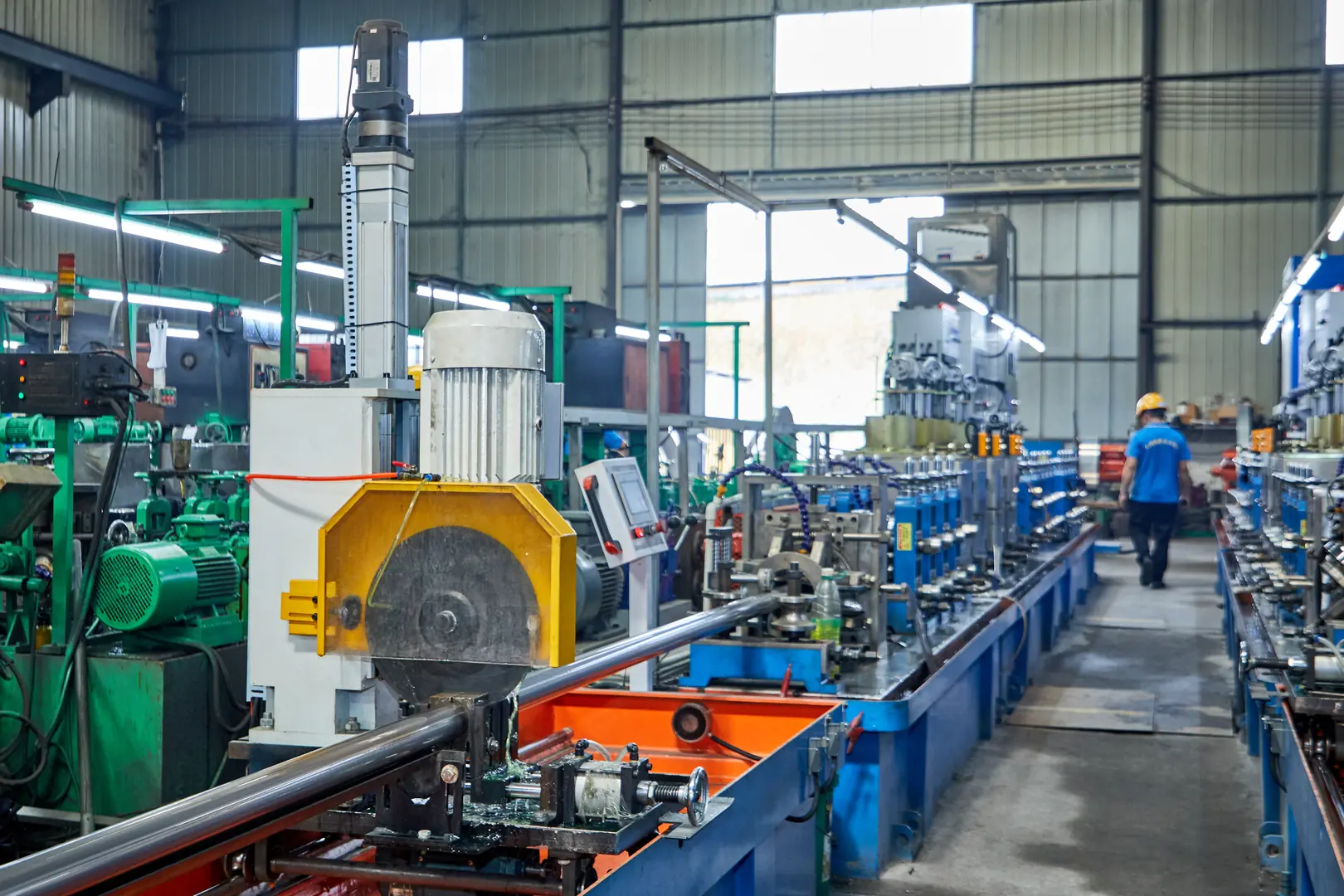
Sourcing is about more than finding the lowest price; it's about finding the right partner. The best suppliers act as an extension of your team. They understand your business and help you navigate the complexities of the global steel market. This is the philosophy we live by at MFY. Our goal isn't just to sell you stainless steel; it's to provide an integrated solution that enhances your operational resilience and reduces your lead times. We combine our production strength with agile supply chain management to deliver not just a product, but a competitive advantage.
Your Blueprint for Successful Bulk Sourcing
Follow these steps to build a robust and reliable sourcing strategy for your stainless steel tubing needs.
- Qualify Your Supplier: Look beyond the price list. Does the supplier have a fully integrated supply chain, from raw materials to export? A company like MFY, which controls production, inventory, and logistics, can offer greater reliability and traceability. Ask for certifications (like ISO 9001[^4]), tour their facilities if possible, and check references. A strong partner is your best insurance against supply chain risk.
- Define and Communicate Your Needs: Create a detailed specification sheet. This should include not just the grade (e.g., 304, 316L) and finish (2B, BA), but also dimensions, tolerances, length requirements, and any specific packaging needs. The clearer you are upfront, the fewer surprises you'll have later. Share your annual forecast to help your supplier plan their production and inventory.
- Negotiate a Strategic Agreement: For bulk purchases, a simple purchase order isn't enough. Work towards a long-term supply agreement. This contract should lock in pricing structures (e.g., fixed price, index-based), define delivery schedules (e.g., monthly drops), outline quality assurance protocols, and establish clear terms for payment and logistics. This creates predictability for both parties.
- Establish a Communication Cadence: Don't just place an order and wait. Set up regular check-ins with your supplier's account manager. This open line of communication is vital for tracking order progress, adjusting delivery schedules as your needs change, and quickly resolving any issues that may arise. It turns a transactional relationship into a true partnership.
By implementing these best practices, you ensure that your bulk procurement strategy delivers on its promise of cost savings, stability, and quality.
Conclusion
Choosing the right stainless steel tubing finish—2B, 2D, or BA—and leveraging a bulk procurement strategy are critical for optimizing your operations. By aligning your technical needs with a smart purchasing model and a reliable partner, you can enhance efficiency, reduce costs, and secure your supply chain.
Have Questions or Need More Information?
Get in touch with us for personalized assistance and expert advice.




 English
  Русский