Corrosion Resistance of SS 304/316 in Municipal Water Supply Systems
Aging water infrastructure faces constant corrosion risks. This threatens public health and leads to massive maintenance costs. Stainless steel 304 and 316 offer a durable, safe, and cost-effective solution.
The corrosion resistance of SS 304 and 316 is critical because it ensures the long-term integrity, safety, and cost-efficiency of municipal water systems. These alloys prevent contamination from corrosion byproducts, reduce leaks, and minimize costly maintenance over the system's lifespan.
As a Global Business Director at MFY, I've seen firsthand how infrastructure decisions impact communities for decades. The choice of material for something as vital as a water supply system is not just a technical detail; it's a commitment to public health and sustainability. The debate between short-term cost and long-term value is constant, but when it comes to water, the right choice becomes clear. Let's explore why stainless steel, specifically grades 304 and 316, has become the benchmark for modern water infrastructure.
What is the Role of Stainless Steel in Municipal Water Supply Systems?
Cities often rely on traditional piping materials that degrade over time. This degradation leads to leaks, service disruptions, and potential water contamination. Stainless steel provides a strong, safe, and long-lasting alternative.
The primary role of stainless steel is to provide a highly durable, corrosion-resistant, and hygienic material for transporting and storing municipal water. It is used for pipes, tanks, valves, and fittings, ensuring system longevity and protecting water quality from source to tap.
For decades, materials like ductile iron, concrete, and PVC were the standards. While they served their purpose, we now have a much clearer understanding of their long-term limitations. At MFY, we work with municipal planners who are moving towards more resilient solutions. This is where stainless steel, particularly austenitic grades like 304 and 316, plays a transformative role. It's not just about replacing old pipes; it's about upgrading the entire philosophy of water management.
Beyond Durability: A Commitment to Public Health
The most significant advantage of stainless steel is its inertness. It doesn't react with water or the common disinfectants, like chlorine, used in municipal systems. This means no metallic taste and, more importantly, no leaching of harmful compounds into the water supply. The smooth, non-porous surface of stainless steel also makes it difficult for bacteria and biofilms to attach and grow, which is a critical factor in preventing microbiologically influenced corrosion (MIC)[^1] and maintaining water hygiene.
A Sustainable Choice for Urban Growth
As cities expand, their infrastructure must keep pace. Stainless steel offers a lifecycle cost advantage that is hard to ignore. While the initial investment might be higher than some traditional materials, its extended service life—often exceeding 100 years with minimal maintenance—results in a much lower total cost of ownership. I remember a conversation with an engineer from a rapidly growing city in Southeast Asia. They chose SS 316 for their new water distribution network not just for its corrosion resistance in their coastal environment, but because their models showed it would save them millions in maintenance and replacement costs over the next 50 years.
| Material | Typical Lifespan | Corrosion Risk | Maintenance Needs |
|---|---|---|---|
| Stainless Steel | 100+ years | Very Low | Minimal |
| Ductile Iron | 50-75 years | High (requires lining) | Regular |
| PVC | 50-100 years | Low (but can be brittle) | Moderate |
| Concrete | 75-100 years | Moderate (can crack/leach) | Moderate |
How Are SS 304/316 Currently Used in Water Infrastructure?
Engineers and planners often find it challenging to select the right material for a specific application. Using the wrong grade can lead to premature failure and unexpected costs. SS 304/316 have proven applications.
SS 304 is widely used for tanks, reservoirs, and piping in low-chloride environments. SS 316, with its added molybdenum, is preferred for pipes, pumps, and valves in coastal areas or systems with higher chloride levels, offering superior pitting and crevice corrosion resistance.
The choice between Grade 304 and 316 is one of the most common questions we get at MFY. It's a practical decision that depends entirely on the specific environment. Think of it this way: 304 is the reliable workhorse for general-purpose applications, while 316 is the specialist you bring in for tougher conditions. The key is to analyze the water chemistry and environmental factors before making a selection. Making the right choice upfront is the most effective way to guarantee the long-term performance and reliability of the entire system.
Grade 304: The Versatile Standard
Stainless steel 304 is the most widely used stainless steel globally. In municipal water systems, it is an excellent choice for large-scale components where the water has low chloride content. This includes:
- Water Storage Tanks and Reservoirs: Its strength and corrosion resistance make it ideal for holding large volumes of treated water.
- Large-Diameter Transmission Pipes: For moving water over long distances in stable, non-aggressive soil and water conditions.
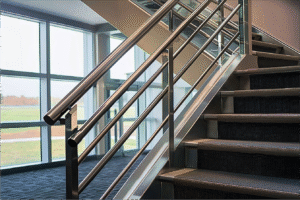
- Architectural Components: In treatment plants, such as railings, ladders, and walkways, where general corrosion resistance is sufficient.
Grade 316: The Chloride Champion
The addition of about 2% molybdenum gives SS 316 a significant advantage in resisting chlorides, which are a primary cause of pitting and crevice corrosion. This makes it essential for more demanding applications. I worked with a client in a coastal city who initially considered 304 for their desalination plant's outfall pipes to save on costs. We analyzed the high salinity and water chemistry and strongly recommended 316L. They made the switch, and that system has been operating without any corrosion issues for over a decade.
| Application | Recommended Grade | Rationale |
|---|---|---|
| Inland Water Storage Tank | SS 304 | Low chloride exposure, cost-effective. |
| Coastal Water Intake Pipe | SS 316 / 316L | High resistance to chloride-induced pitting. |
| Water Treatment Valves/Pumps | SS 316 / 316L | Critical components requiring maximum reliability. |
| General Plant Framework | SS 304 | Structural use where corrosion risk is lower. |
What Corrosion Challenges Do Municipal Water Systems Face?
Even a robust material like stainless steel is not completely immune to all forms of attack. Specific water chemistries and environmental conditions can create aggressive corrosion challenges. Understanding these threats is key to prevention.
The primary corrosion challenges in municipal water systems are chloride-induced pitting and crevice corrosion, especially in stagnant areas. Other risks include microbiologically influenced corrosion (MIC) from biofilms and stress corrosion cracking (SCC) in specific high-temperature, high-chloride environments.
It's a mistake to think of any material as a "fit-and-forget" solution. The reality is that water is a complex chemical environment. Its composition can vary dramatically from one municipality to another, and even seasonally within the same system. Factors like pH, temperature, dissolved oxygen, and, most importantly, chloride concentration all play a role. At MFY, a core part of our service is helping clients understand these variables so they can not only select the right grade but also design the system to mitigate these inherent risks from day one.
The Pervasive Chloride Threat
Chlorides are the arch-nemesis of stainless steel. They can break down the passive, protective oxide layer that gives the material its "stainless" quality. This can lead to localized corrosion, primarily in the form of pitting. Pitting is particularly dangerous because it can be small on the surface but lead to deep cavities that perforate the pipe wall, causing leaks that are difficult to detect. This is why SS 316, with its molybdenum content, is so valuable. The molybdenum enhances the stability of the passive layer, making it much more resistant to chloride attacks.
The Hidden Dangers: Crevices and Biofilms
Crevice corrosion is another localized threat that occurs in tight, shielded spaces where water can become stagnant. Think of the areas under gaskets, seals, or bolt heads. In these crevices, the local chemistry can change, becoming more acidic and concentrated with chlorides, leading to rapid corrosion. Proper design that minimizes or eliminates such crevices is a critical preventative strategy. Furthermore, the natural formation of biofilms on pipe surfaces can create localized environments underneath them that are also highly corrosive, a process known as Microbiologically Influenced Corrosion (MIC). Regular cleaning or designing for higher flow rates can help disrupt these biofilms and reduce the risk of MIC.
What Strategies Can Enhance the Corrosion Resistance of SS 304/316?
Maximizing the life of a critical asset like a water system is a top priority for any municipality. Simply choosing the right stainless steel grade is not enough. Proper design, fabrication, and maintenance are essential.
Key strategies include selecting the appropriate grade (316 for high-chloride areas), ensuring high-quality welding practices to prevent sensitization, applying surface treatments like passivation to enhance the protective oxide layer, and designing systems to avoid crevices and areas of stagnation.
Over my years in the industry, I’ve seen projects succeed or fail based on the details of execution. A premium material like SS 316L can still underperform if it's not handled correctly during fabrication and installation. This is why we, at MFY, place such a strong emphasis on the quality of our products and the technical support we provide. Ensuring the material's inherent properties are preserved throughout the project lifecycle is just as important as the initial selection. It’s a holistic approach that guarantees the long-term value our clients expect.
The Critical Role of Fabrication
Welding is a particularly sensitive step. When stainless steel is heated to a certain temperature range (around 450-850°C), chromium carbides can form at the grain boundaries. This process, called sensitization, depletes the surrounding area of the chromium needed for corrosion resistance, making the weld zone vulnerable to attack. Using low-carbon "L" grades, like 304L or 316L, is the primary strategy to prevent this. Additionally, post-weld cleaning to remove heat tint (oxide scale) and passivation treatments are crucial. Passivation is a chemical process that removes free iron from the surface and helps build a more robust, uniform passive layer.
Designing for Durability
Good design can engineer corrosion risks out of the system. This involves:
- Minimizing Crevices: Using fully welded joints instead of bolted flanges where possible.
- Ensuring Good Drainage: Designing tanks and pipes to be fully drainable to prevent stagnant water.
- Maintaining Flow: Keeping water velocity within a range that discourages both erosion-corrosion (if too high) and biofilm settlement (if too low).
| Strategy | Description | Impact on Corrosion Resistance |
|---|---|---|
| Use "L" Grades (304L/316L) | Low carbon content (<0.03%). | Prevents sensitization during welding. |
| Post-Weld Passivation | Chemical treatment to enrich the surface in chromium. | Creates a more uniform, robust passive layer. |
| Smooth Surface Finish | Polishing surfaces to remove imperfections. | Reduces sites for corrosion initiation and biofilm attachment. |
| Crevice-Free Design | Using welded connections and smooth transitions. | Eliminates stagnant zones where crevice corrosion starts. |
What Are the Technical Recommendations for Long-Term Durability in Water Systems?
Municipal planners and engineers need clear, actionable guidance to ensure their projects succeed. Vague advice can lead to costly design and material selection mistakes. Following specific technical standards ensures project success.
Key recommendations include: conducting a thorough water chemistry analysis before selection, choosing SS 316L for chloride levels above 200 ppm, adhering to welding standards like AWS D1.6, performing post-fabrication passivation, and implementing a regular inspection and maintenance plan.
Building a water system that will last for a century requires foresight and discipline. It begins with a deep understanding of the local conditions and ends with a commitment to quality at every stage. At MFY, we often act as partners, not just suppliers, working with clients from the very beginning to help them navigate these technical requirements. The goal is always the same: to build a system that is safe, reliable, and sustainable for generations. Following a clear set of technical best practices is the only way to achieve that.
Pre-Project Analysis and Selection
Before a single piece of steel is ordered, a comprehensive analysis of the source water is non-negotiable. The key parameters to test for are chlorides, pH, temperature, and hardness. A common rule of thumb is to specify SS 316 or 316L if chloride levels are expected to consistently exceed 200 parts per million (ppm). For lower chloride levels, SS 304 or 304L is often a perfectly suitable and more economical choice. This data-driven approach removes guesswork and prevents costly over-specification or, even worse, under-specification.
Fabrication and Installation Best Practices
During the construction phase, strict adherence to established standards is paramount.
- Welding: All welding procedures should conform to standards such as AWS D1.6/D1.6M for structural welding of stainless steel. Use of low-carbon filler metals matching the "L" grade base material is essential.
- Handling: Protect the stainless steel from contamination with carbon steel. Use dedicated tools, handling equipment, and storage areas to prevent free iron from embedding in the surface, which can cause rust spots.
- Cleaning and Passivation: After welding and assembly, all surfaces must be thoroughly cleaned to remove weld tint, grease, and other contaminants. A final passivation treatment should then be applied to the entire system to ensure a uniform, protective passive layer is established before the system is put into service.
This rigorous, step-by-step process ensures that the final installed system retains all the corrosion-resistant properties that made stainless steel the material of choice in the first place.
Conclusion
Choosing the right stainless steel grade, 304 or 316, and applying rigorous fabrication and design standards are fundamental. This approach ensures the creation of resilient, safe, and cost-effective municipal water systems that are built to last for generations, safeguarding public health and delivering long-term value.
Have Questions or Need More Information?
Get in touch with us for personalized assistance and expert advice.

 English
  Русский